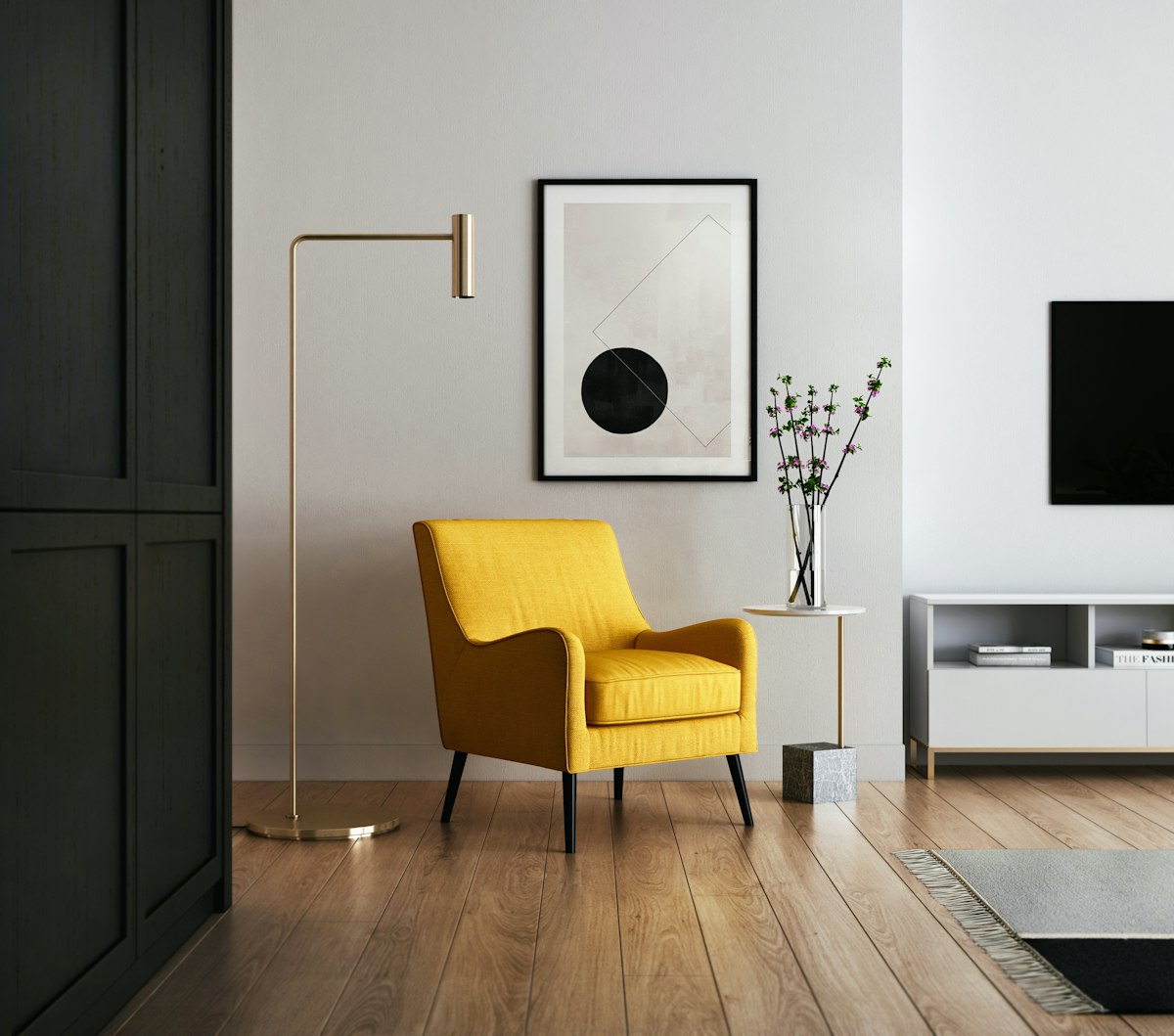
A Refresh Is Not a Renovation
A living room starts feeling stale not because the furniture is old, but because the room has accumulated visual noise. Too many throw pillows. A rug that has faded unevenly. Lighting that was fine three years ago but now feels flat. The fix is not a $10,000 renovation. The fix is a systematic reset: remove everything, evaluate what comes back, and update the three elements that change a room’s mood the fastest. Those elements are textiles, lighting, and layout.
A well-executed refresh takes one weekend, costs $200 to $800, and makes the room feel like a different space. This guide walks through every step.
Phase 1: The Total Reset
Strip the Room
Take everything off the shelves. Remove the throw pillows, the blankets, the art. Roll up the rug. Take down the curtains. Clear every surface. The goal is to see the room as it actually is: walls, floor, and furniture.
Most people skip this step and regret it. Rearranging accessories on top of existing clutter produces marginal improvement. Starting from an empty canvas reveals the room’s real structure. It also reveals how much accumulated stuff was making the space feel heavy.
While the room is empty, clean aggressively. Vacuum behind the sofa. Dust the shelves. Wash the windows. Natural light entering through clean glass changes the room’s mood more than any purchase.
Evaluate the Bones
With the room stripped, ask three questions:
- Does the furniture layout still work? Maybe it did two years ago, but daily life has shifted. The sofa might face the wrong direction for current habits. The coffee table might block a traffic path that did not exist before.
- What is the room’s natural focal point? A fireplace, a large window, an accent wall. The furniture arrangement needs to orient toward this point, not fight it.
- What is the room’s biggest problem? Dark corners? A traffic bottleneck? A color palette that feels dated? Identifying the single biggest issue focuses the refresh budget where it will have the most impact.
Phase 2: Shop Your Home First
Before spending a dollar, walk through the rest of the house. That framed print in the hallway might look better above the living room sofa. The side chair from the bedroom might work as an accent chair. The table lamp from the guest room might be exactly the warm light source the living room needs.
Mixing pieces from different rooms creates a curated, cohesive look that buying everything from one store cannot replicate. Designers call this “collected” rather than “decorated.” It gives a room personality.
Check storage closets and attics. A forgotten throw blanket, a set of candlesticks, or a vase that was put away two years ago might be exactly what the refreshed room needs. Free is the best budget tier.
Phase 3: Textiles (The Biggest Impact Per Dollar)
Textiles control the color palette, texture, and warmth of a room. Swapping textiles is the single fastest way to change how a living room feels without touching the walls or furniture.
Throw Pillows
New pillow covers cost $15 to $40 each and change the color story of the entire seating area. Replace worn, faded, or mismatched covers with a coordinated set in two or three complementary textures.
The formula: pick one solid in the room’s dominant accent color, one pattern (stripe, geometric, or botanical), and one texture (linen, velvet, or boucle). Three to five pillows total for a standard sofa. More than five looks cluttered.
Specific options:
- H&M Home linen cushion covers ($15 each, 20 x 20 inches / 50 x 50 cm). Available in 30+ colors. The best value in pillow covers.
- West Elm Lush Velvet pillow covers ($30 to $45 each). Rich texture that photographs well and wears cleanly.
- Target Threshold boucle pillow ($25, 18 x 18 inches / 46 x 46 cm). Adds chunky texture at a low price point.
Curtains
Floor-to-ceiling curtains make a room feel taller and more finished. Mount the rod as close to the ceiling as possible, regardless of where the window starts. Let the panels touch the floor or pool slightly.
Replacing short, thin curtains with full-length panels is one of the most dramatic single changes in a room refresh. The IKEA Dytag curtain panels ($35 per pair, 98 inches / 250 cm long) work for standard 8-foot ceilings. For 9 or 10-foot ceilings, West Elm Belgian Linen panels ($90 to $130 each) come in 96 and 108-inch lengths.
| Curtain Upgrade | Cost per Window | Visual Impact |
|---|---|---|
| IKEA Dytag panels | $35 per pair | High. Full-length, clean drape |
| Target Threshold blackout panels | $25 each | Moderate. Functional, basic look |
| West Elm Belgian Linen | $90 to $130 each | Very high. Textured, premium feel |
| Pottery Barn Emery Linen | $80 to $120 each | Very high. Classic, tailored drape |
Rugs
A new rug resets the color foundation of the room. A rug that is too small is the most common mistake. The front legs of the sofa and chairs should rest on the rug. A 5 x 8-foot (152 x 244 cm) rug works for compact seating areas. An 8 x 10-foot (244 x 305 cm) rug works for larger arrangements.
- Rugs USA ($100 to $300 for 5 x 8). Wide selection, frequent sales. Quality varies by line but the Safavieh and NuLoom brands sold here are reliable.
- IKEA Stoense ($200 for 5’7” x 7’10”). Low pile, dense, easy to vacuum. A solid mid-range choice.
- West Elm Distressed Arabesque ($299 to $599 for 5 x 8). A textured wool rug that adds warmth and pattern.
Throw Blankets
One quality throw blanket draped over the sofa arm or folded at the end of the sectional adds warmth without clutter. The Pendleton Eco-Wise wool throw ($99, 54 x 72 inches / 137 x 183 cm) is a timeless choice. The Barefoot Dreams CozyChic throw ($98) is the softer, more casual alternative.
Phase 4: Lighting Updates
Bad lighting makes good furniture look cheap. Good lighting makes basic furniture look intentional. Lighting is the second-highest-impact refresh element after textiles.
Replace the Overhead Fixture
If the living room still has a builder-grade “boob light” or a dated ceiling fan, replace it. A modern flush mount or semi-flush mount costs $50 to $200 and installs in 20 minutes.
- IKEA Sjogras flush mount ($25). The minimum viable upgrade. Clean, simple, inexpensive.
- Schoolhouse Electric Flushmount disk ($149). A mid-century modern classic. Available in brass, black, and white finishes.
- Cedar & Moss Aura flush mount ($189). Handmade in Portland. Distinctive without being loud.
Add Floor Lamps
A floor lamp in a dark corner pushes light into the room’s edges, making the space feel larger and warmer. One or two floor lamps supplementing the overhead fixture transforms the room’s atmosphere.
- IKEA Hektar floor lamp ($69). Industrial profile, adjustable head, compact base.
- Article Beacon floor lamp ($149). Minimal tripod design. Works in modern and mid-century rooms.
- West Elm Overarching Floor Lamp ($299). An arc lamp that provides light over the sofa without a table.
Add Table Lamps
A table lamp on a console or side table provides low, warm light at eye level. This is the layer that makes a room feel cozy rather than simply lit.
- Target Threshold ceramic table lamp ($30). Available in a dozen colors. Good-quality shade.
- West Elm Rejuvenation Easton table lamp ($120). Brass and linen. A reliable design classic.
Use 2700K bulbs in every lamp. This warm color temperature creates a golden, inviting atmosphere. Do not mix 2700K lamps with 4000K overhead fixtures. The color mismatch is jarring.
Phase 5: Layout Rearrangement
Moving furniture costs nothing and can make the room feel completely new.
Try the Opposite Wall
If the sofa has faced the same direction for two years, move it to the opposite wall. This single change forces a new traffic pattern, a new relationship with the window light, and a fresh perspective on the room. It sounds trivial. It is not.
Float the Furniture
Pull the sofa 6 to 12 inches (15 to 30 cm) away from the wall. Place the chairs at an angle to the sofa instead of parallel. Floating furniture creates intimate conversation groupings and makes the room feel intentional rather than default.
Add a Console Table Behind the Sofa
If the sofa now floats in the room, a narrow console table (12 to 16 inches / 30 to 40 cm deep) behind it adds a surface for a table lamp and a few objects while giving the sofa’s back a finished look. The IKEA Listerby console ($150, 36 x 15 inches / 92 x 38 cm) and the West Elm Streamline console ($250, 44 x 12 inches / 112 x 30 cm) both work.
Phase 6: Art and Objects
The Rule of Less
When putting items back, follow one rule: if it does not serve a function or bring genuine visual pleasure, leave it out. This is the step where the refresh either succeeds or fails.
A coffee table with a tray, a candle, and one book looks clean. The same table with four coasters, two remotes, a stack of magazines, a decorative bowl, and yesterday’s mail looks chaotic. Leave surfaces partially empty. White space is not wasted space. It is breathing room.
Art Placement
Hang art so the center of the piece sits at 57 to 60 inches (145 to 152 cm) from the floor. This is gallery standard and works whether the viewer is sitting or standing. Art hung too high is the most common wall decoration mistake.
For a gallery wall, maintain 2 to 3 inches (5 to 8 cm) between frames. Lay the arrangement out on the floor first and photograph it before putting nails in the wall.
Refresh Budget Summary
| Effort Level | Total Budget | What It Covers |
|---|---|---|
| Light refresh | $100 to $250 | New pillow covers, one throw blanket, one table lamp |
| Medium refresh | $300 to $600 | New rug, updated curtains, two lamps, pillow swap |
| Full refresh | $700 to $1,200 | Everything above plus new overhead fixture, console table, art |
The Weekend Timeline
Saturday morning: Strip the room. Clean everything. Evaluate the layout.
Saturday afternoon: Shop your home. Buy what is needed (textiles, lamps, hardware).
Sunday morning: Install curtain rods, hang curtains, place the rug. Rearrange furniture.
Sunday afternoon: Add lamps. Place art. Style surfaces with restraint.
Sunday evening: Sit in the room. Turn on the lamps. Let the overhead fixture stay off. If it feels like a different space, the refresh worked.
The best part of a room refresh is not the new stuff. It is the rediscovery that the room, once freed from accumulated clutter and flat lighting, was always a good room. It just needed permission to breathe.