The Answer Is Not Smaller Furniture
A small living room does not need miniature furniture. It needs furniture that creates visual openness. The single most effective trick is choosing pieces with exposed legs. Seeing the floor beneath a sofa or chair adds perceived square footage without changing the actual dimensions of the room.
Most people respond to a small living room by buying the smallest sofa they can find, scattering tiny decorative objects on every surface, and painting everything white. All three moves backfire. A too-small sofa looks out of proportion. Lots of small objects create visual clutter. And stark white walls, without deliberate contrast, feel cold and institutional rather than spacious.
This guide covers the furniture strategies, lighting techniques, layout rules, and color choices that actually make a small room feel bigger. Everything here is tested and specific, with real product dimensions and prices.
Furniture That Opens Up the Room
Exposed Legs and Raised Frames
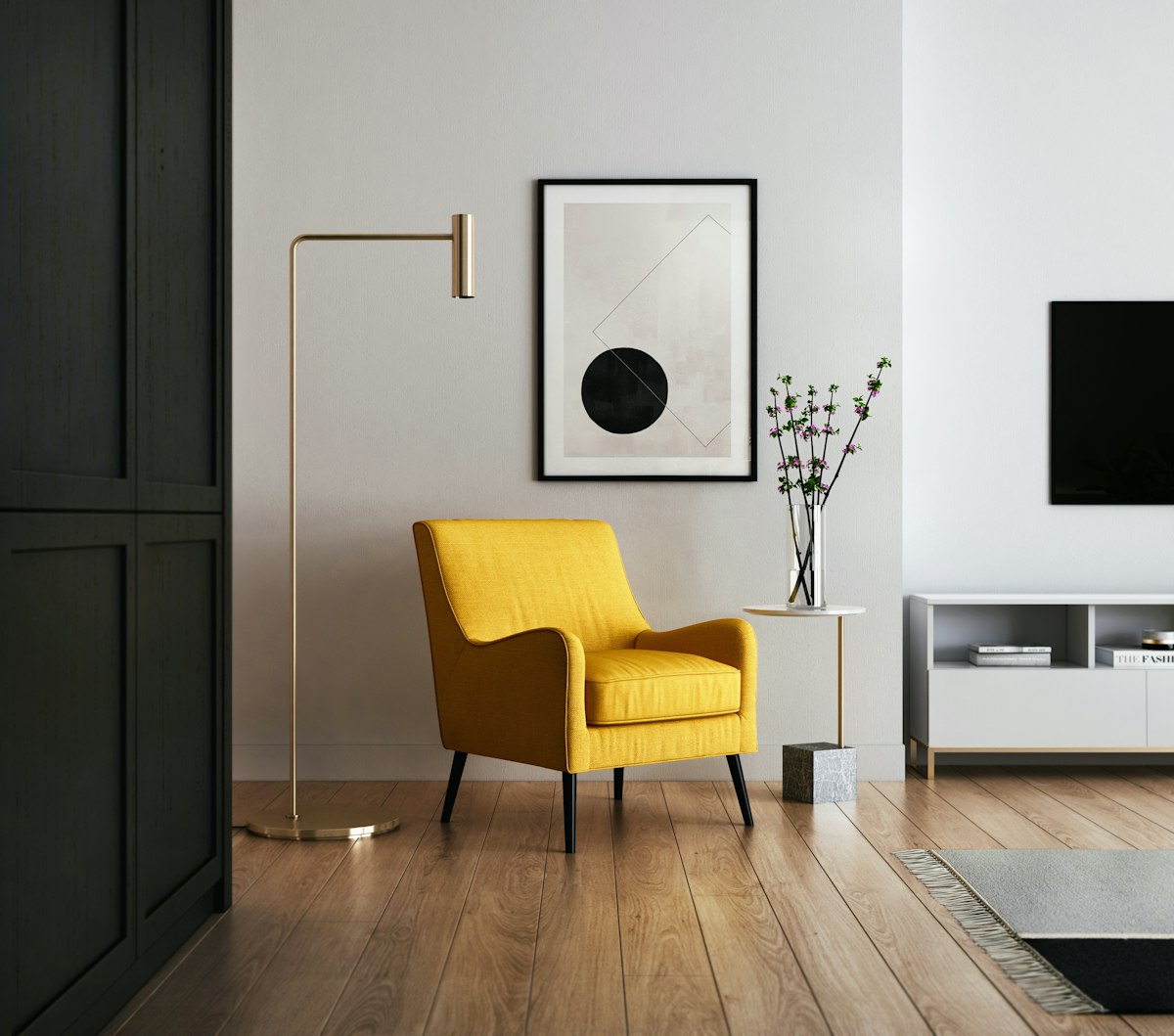
A sofa or chair with 6 to 8-inch (15 to 20 cm) legs reveals floor space underneath. The eye reads that visible floor as open room. A skirted sofa or a piece that sits directly on the ground blocks that sightline and makes the room feel heavier.
The IKEA Applaryd loveseat ($449, 71 inches / 180 cm wide) and the Article Ceni sofa ($999, 77 inches / 196 cm wide) both have tapered legs that provide this visual lift. For chairs, the CB2 Svelti ($399) sits on slim metal legs that practically disappear.
Transparent and Low-Profile Pieces
Acrylic and glass coffee tables let the eye pass through them. The CB2 Peekaboo acrylic coffee table ($399, 44 x 22 inches / 112 x 56 cm) provides a functional surface without any visual weight. A traditional wood coffee table of the same dimensions would feel twice as heavy in a small room.
Clear furniture effectively adds zero visual mass to a room. That sounds like a small thing until you see the difference in a 12 x 14-foot space.
Multi-Functional Pieces
In a small room, every item earns its spot by performing at least two functions.
- Storage ottomans: The IKEA Kivik ottoman ($279) works as a footrest, extra seating, and stores throw blankets inside. One piece doing three jobs means two fewer pieces taking up floor space.
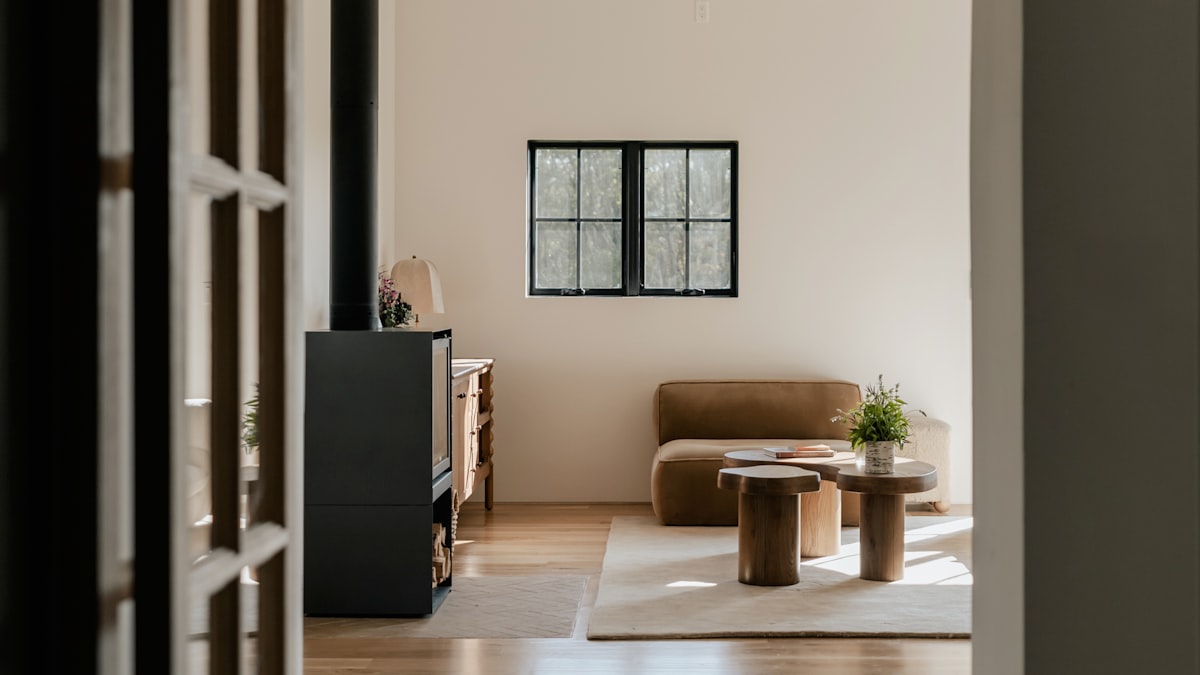
- Nesting tables: The West Elm Terrace nesting tables ($249 for a set of three) tuck together into a single footprint and spread out when guests arrive. They replace a coffee table and two end tables with one compact stack.
- Wall-mounted consoles: A floating media console keeps the floor underneath completely clear. The IKEA Besta system ($175 and up) mounts to the wall and stores media equipment, books, and remotes without any floor contact.
The Lighting Strategy
Dark corners are the enemy. When your brain cannot see the boundaries of a room, it perceives the space as smaller than it actually is. Lighting the corners pushes the visual edges outward.
Layer Three Light Sources
A single overhead fixture creates a flat, shadowless wash that makes a room feel like a dorm. Three layers of light create depth and dimension.
Ambient light comes from overhead. A flush-mount ceiling fixture or recessed cans provide the base layer. The Hampton Bay 13-inch LED flush mount ($30 at Home Depot) is a clean, inexpensive option.
Task light comes from a floor lamp or table lamp positioned where activities happen. A slim floor lamp in the corner next to the sofa provides reading light and fills the room’s edges. The IKEA Hektar floor lamp ($69) has a compact footprint and adjustable head.
Accent light adds dimension. LED strip lights behind a media console or inside open shelving create a glow that suggests depth. A 16-foot (5 m) strip of Govee RGBIC LED lights ($20) does this for almost nothing.
Use Reflective Surfaces
Metallic and glass accents bounce light around the room. A brass table lamp, a glass side table, or a mirror-backed shelf reflects light sources rather than absorbing them. This effectively doubles the illumination without adding another fixture.
A large mirror opposite a window is the single highest-impact visual trick for any small room. The mirror doubles the natural light entering the space and creates the illusion of a second room beyond the wall. The IKEA Hovet mirror ($149, 30 x 77 inches / 78 x 196 cm) is the classic budget choice for this.
Color and Paint Strategy
Light Colors, Not Necessarily White
Light colors reflect more light, making walls feel farther away. But “light” does not mean “white.” Stark white can feel sterile and actually emphasizes how small a room is by making every piece of furniture stand out in harsh contrast.
Better options include warm off-whites, light greys, soft sage greens, and pale blues. Benjamin Moore’s Classic Gray (OC-23) and Sherwin-Williams’ Agreeable Gray (SW 7029) are two of the most popular choices for small spaces. They read as “light” without the clinical feel of pure white.
The Monochromatic Trick
Using varying shades of the same color family across walls, trim, and furniture creates a seamless visual flow. The eye does not stop at boundaries where colors change. Instead, the room reads as one continuous space.
A room with light grey walls, a slightly darker grey sofa, and off-white curtains feels unified. A room with white walls, a navy sofa, and red accent pillows feels visually chopped up. In a large room, that contrast is dynamic. In a small room, it makes everything feel tighter.
Vertical Stripes and Height Tricks
Floor-to-ceiling curtains are the second-best visual trick after the mirror. Mount the curtain rod as close to the ceiling as possible, not at the top of the window frame. Let the curtains run all the way to the floor. This draws the eye upward and makes the walls feel taller.
Standard curtain panels at 84 inches ($25 to $60 per panel at Target or West Elm) work for standard 8-foot ceilings. For 9 or 10-foot ceilings, order 96-inch or 108-inch panels.
Layout Rules for Small Rooms
See More Floor
The more floor surface that is visible, the larger the room feels. This is the governing principle. Every layout decision flows from it.
Use a rug large enough to go under the front legs of the sofa and chairs. A 5 x 8-foot (152 x 244 cm) or 6 x 9-foot (183 x 274 cm) rug works for most small living rooms. A tiny 3 x 5 rug in the center of the room fragments the space and makes it look smaller.
Pull Furniture Away from the Walls
This feels counterintuitive in a small room. But pulling the sofa even 4 to 6 inches (10 to 15 cm) away from the wall creates a sliver of breathing room behind it. The room feels less compressed. The effect is subtle but real.
Use Wall-Mounted Storage
Floating shelves, wall-mounted media consoles, and hanging planters keep the floor clear. An uninterrupted floor-to-wall sightline makes a room feel open. Every floor-standing piece of furniture breaks that sightline.
The West Elm Floating Wood Wall Shelves ($49 to $99 each) and the IKEA Lack wall shelf ($12.99) are solid options for adding storage without consuming floor space.
Furniture Dimensions for Small Living Rooms
Oversized furniture is the fastest way to kill a small room. Here are the target dimensions.
| Item | Recommended Size for Small Rooms | Why It Works |
|---|---|---|
| Sofa | 60 to 72 inches (152 to 183 cm) wide | Keeps walkways clear on both sides |
| Coffee Table | 30 to 36 inches (76 to 91 cm) long | Proportional to apartment sofas |
| Rug | 5 x 8 or 6 x 9 feet (152 x 244 or 183 x 274 cm) | Anchors the zone without overwhelming |
| Floor Lamp | Slim profile, 60+ inches (152+ cm) tall | Adds height without footprint |
| Side Table | 14 to 18 inches (35 to 45 cm) diameter | Holds a drink and lamp without crowding |
| Media Console | Wall-mounted, 48 to 60 inches (122 to 152 cm) | No floor contact, maximum openness |
The 36-inch walkway rule still applies in small rooms. If the path between the sofa and the wall is less than 30 inches (76 cm), the sofa is too big. Replace it with a loveseat or apartment-sized option.
Budget Breakdown
Budget Tier ($300 to $600)
Focus on the highest-impact changes first. A large mirror ($100 to $150), floor-to-ceiling curtains ($50 to $120 for two panels), a slim floor lamp ($50 to $100), and wall-mounted shelving ($50 to $100) deliver the most visual expansion per dollar spent. Total: approximately $250 to $470.
Mid-Range Tier ($700 to $1,500)
Add an apartment-sized sofa ($500 to $1,000). The IKEA Landskrona two-seat sofa ($599, 64 inches / 164 cm) or the Article Ceni loveseat ($799, 63 inches / 160 cm) both fit small rooms. Pair with a transparent coffee table ($200 to $400) and a large area rug ($150 to $300).
Premium Tier ($1,800 and up)
Custom-scaled furniture from Room & Board or West Elm, designed specifically for apartment living. A compact sectional ($1,500 to $2,500), premium wall-mounted media storage ($400 to $800), and professional-quality lighting ($200 to $400).
The Editing Principle
Making a small room feel bigger is ultimately an exercise in editing. Every object that does not serve a clear function or bring genuine satisfaction earns removal.
A coffee table with just a tray and a single plant looks clean. The same table with four coasters, two remotes, a stack of magazines, and a decorative bowl looks chaotic. In a large room, that clutter is absorbed. In a small room, it dominates.
Walk through the room and ask one question about every object: does this earn its square footage? A well-chosen 60-inch sofa with clear floor beneath it, a single floor lamp in the corner, and a mirror catching the afternoon light will always make a room feel larger than the same space crammed with furniture, however small that furniture might be.
The room is not the problem. The amount of stuff in it almost always is.