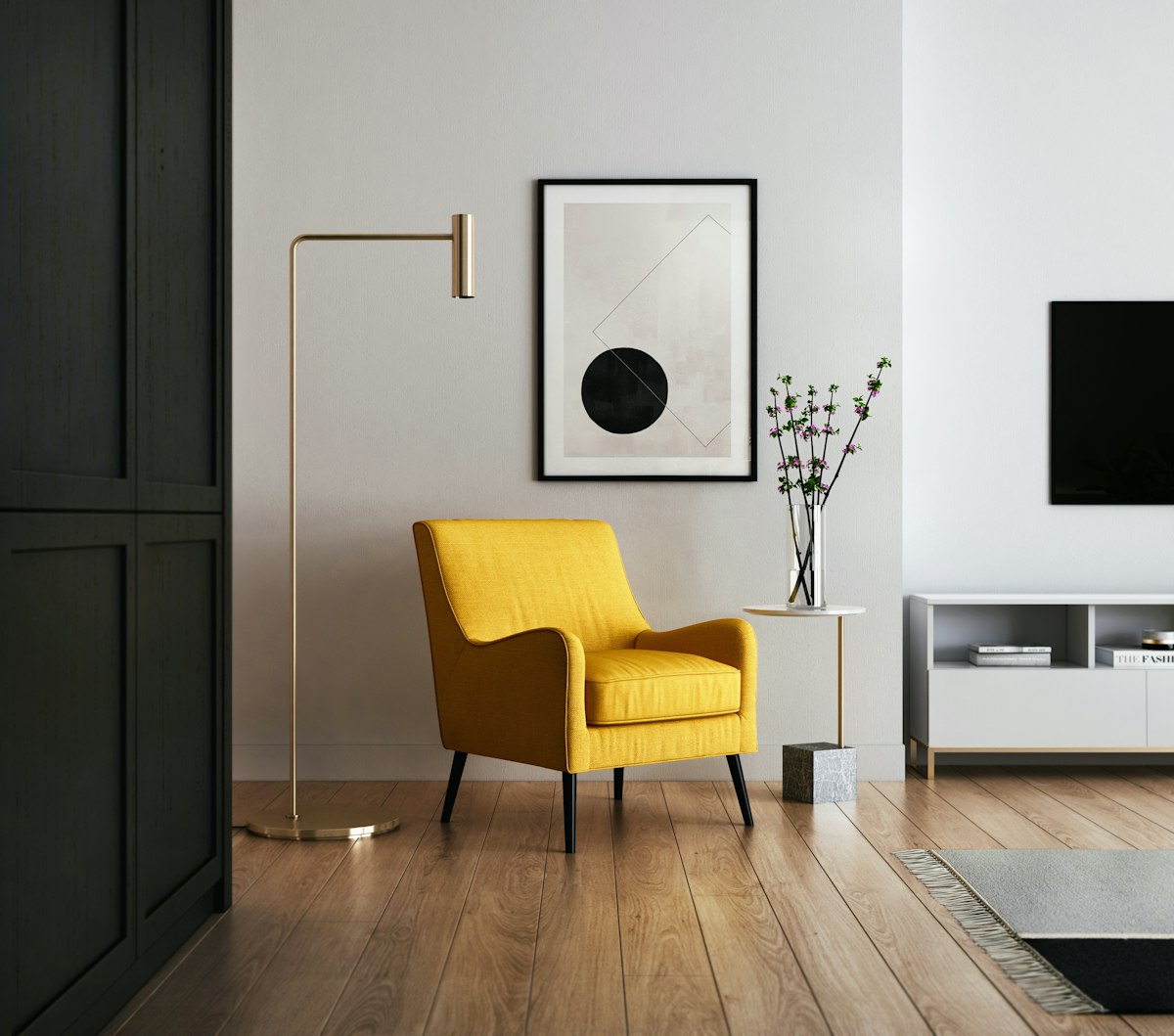
A reading nook is one of the most satisfying things you can add to a home — a defined spot that signals “this is for one thing.” You don’t need a dedicated room or an architectural alcove. A corner, a stretch of wall, even the end of a hallway can become a reading nook if you treat the space with intention.
The key elements are simple: a good chair, the right light, and a handful of details that make the space comfortable to spend an hour in. Here’s how to build it properly.
Choosing the Right Chair
The chair is the most important decision. It needs to support extended sitting — not just look good in a photo.
What to Look For
Back support: Upright reading requires lumbar support. Low, overly soft bucket chairs look cozy but leave you hunching within twenty minutes. Look for chairs with a defined lumbar curve or adjustable back support.
Seat depth: A seat that’s too deep leaves shorter people sitting with no back contact. Look for a seat depth of 19–21 inches for most adults. Deep seats work if you tend to sit cross-legged rather than upright.
Armrests: Essential for reading. You want a surface to rest your arms while holding a book without raising your shoulders. Armrests at elbow height when seated (roughly 25–28 inches from the floor) are ideal.
Scale: A large armchair can anchor a corner and create the nook feeling even without other design elements. Smaller tub chairs or accent chairs work better in tight spaces where a full armchair would crowd the room.
Good Options
Anthropologie Mina Chair — curved back, good lumbar, available in performance fabrics. Expensive but holds up.
IKEA Strandmon — wing-back silhouette, firm seat, easy to recover. Excellent value for the form. Pairs well with a separate lumbar pillow.
West Elm Henry Chair — clean lines, solid construction, customizable upholstery. Mid-range price, well-suited to contemporary interiors.
Article Sven Chair — boucle and velvet options. Compact enough for smaller nooks. Good arm height.
Avoid chairs marketed specifically as “reading chairs” with built-in footrests and excessive padding — they tend to look clinical and age poorly.
Lighting: The Make-or-Break Element
Bad lighting ruins a reading nook faster than a bad chair. Overhead ambient light is almost never sufficient for reading — it casts downward shadows and creates eye strain. A nook needs its own dedicated light source positioned at the right angle.
Positioning
The light source should come from slightly above and to the side — not directly overhead, not from behind you. A floor lamp positioned beside and slightly behind the chair is the standard approach. The shade should direct light onto the page, not into your eyes.
Wall-mounted swing-arm sconces work beautifully in nooks where floor space is tight. They require electrical work but free up the floor entirely and look intentional in a way that a floor lamp can’t quite match.
Bulbs
Reading requires light in the 2700–3000K range (warm white) at sufficient lumens. A 60-watt equivalent (800 lumens) is the minimum; 800–1100 lumens at a warm color temperature is the working range. Avoid cool white or daylight bulbs (4000K+) — they’re harsh and reduce melatonin production in the evening.
Dimmable bulbs are worth the marginal extra cost. Being able to reduce intensity for evening reading preserves your ability to wind down.
Recommended Lights
Brightech Sparq Arc Floor Lamp — adjustable arm, LED, dimmable. Practical and affordable.
IKEA RANARP Work Lamp — industrial look, directional shade, inexpensive. Works well in rustic or eclectic nooks.
Swing-arm wall sconce (Schoolhouse, Cedar & Moss) — investment pieces, but hardwired sconces transform a corner into a real architectural feature.
Defining the Space
Without some visual definition, a chair in a corner is just a chair in a corner. The goal is to signal that this space has a purpose.
A Rug
A small rug placed under or in front of the chair defines the nook zone. Even a 3x5-foot rug is enough. Choose something with texture — a jute rug, a low-pile wool, or a flatweave — rather than a plain area rug. The texture adds warmth without competing with the rest of the room.
A Side Table
You need somewhere to put a drink and your book when you’re not reading. A small side table or C-table (designed to slide under armchairs) positioned at armrest height does the job. Look for something with a lower shelf for stacking books.
Good options: the IKEA KNARREVIK, the West Elm Terrace C-Table, or any simple round side table in the 16–20-inch diameter range.
Shelving
A small bookshelf beside or behind the chair reinforces the reading function and keeps books accessible. Even two or three floating shelves above the chair serve this purpose without taking up floor space. A built-in look is achievable with IKEA BILLY bookcases flanking the chair.
A Footrest or Ottoman
Optional but significant. A small ottoman or pouf at the foot of the chair extends your comfort window from twenty minutes to two hours. Keep it proportional — a large ottoman will crowd a small nook. A cube pouf (16–18 inches) works well in tight spaces; a round pouf adds softness.
Details That Actually Matter
A throw blanket: Draped over the arm of the chair, it invites use and adds texture. Cashmere-blend or heavy cotton waffle-knit are the most pleasant to read under.
A reading pillow or lumbar support: Many chairs lack sufficient lumbar support on their own. A firm lumbar pillow (14x22 inches) positioned in the lower back transforms comfort for upright readers.
Outlet access: If your nook doesn’t have a nearby outlet for the lamp and charging devices, plan for this before buying furniture. A cord cover or in-floor cable management keeps the space tidy.
Blackout or light-filtering curtain: If the nook is near a window, a simple panel that can filter harsh afternoon light will extend the usability of the space through the afternoon.
Common Mistakes
Too much seating: A reading nook works because it’s defined and enclosed. Adding a second chair opens it up into a seating area, which is a different thing. One chair, clearly positioned.
No side table: A chair without a surface nearby forces you to hold your book and your drink simultaneously, or put things on the floor. This small omission ruins the experience.
Wrong lamp height: A floor lamp that’s too short puts the light source at eye level — directly in your field of vision as you look down at a page. The shade should be at forehead height when seated, approximately 58–65 inches from the floor.
Over-decorating: A nook cluttered with decorative objects stops feeling like a reading retreat and starts feeling like a display shelf. Keep surfaces clear except for books and one or two functional objects.
A good reading nook takes an afternoon to set up and pays dividends for years. Get the chair right, get the light right, and let the rest follow.