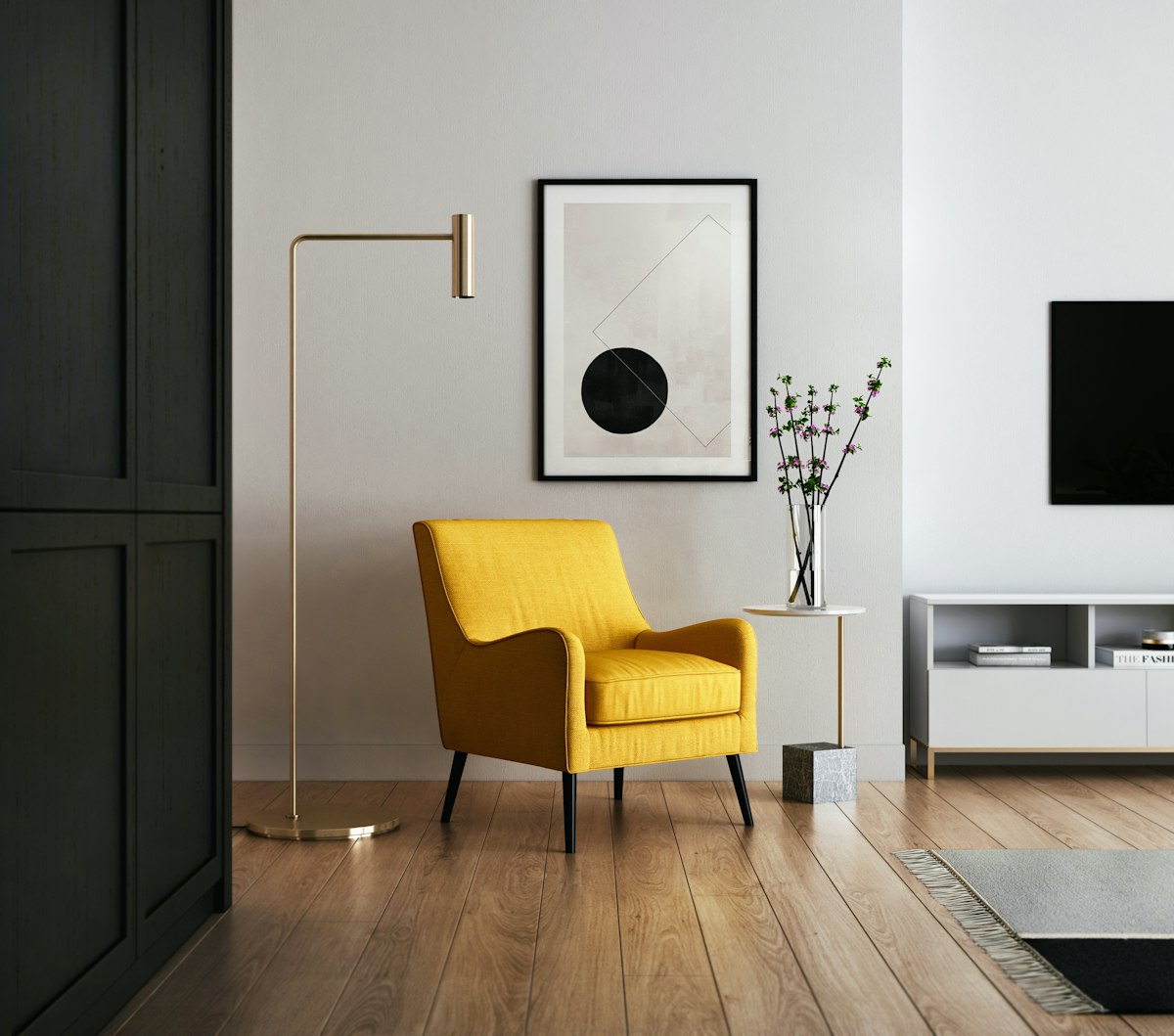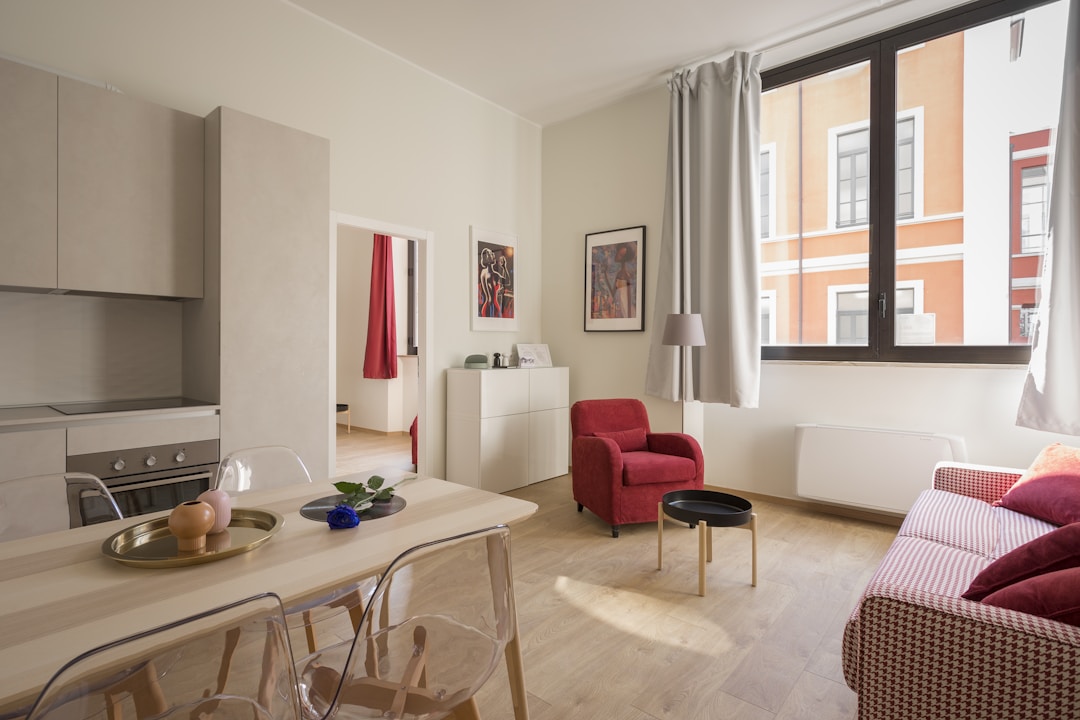
Physical barriers are not the only way to divide a room. You can create distinct functional zones in a studio apartment using rugs, lighting, and strategic furniture placement. The goal is visual separation without blocking natural light.
Takeaway: Use rugs and lighting to define spaces before resorting to physical dividers.
The Rug Strategy
Rugs act as anchors for specific activities. A 5x8 foot (150x240 cm) rug under a sofa and coffee table immediately defines the “living room.” A separate runner or round rug can designate the “bedroom” area.
Keep a minimum of 12 inches (30 cm) of bare floor between different rugs to establish a clear boundary. Never overlap rugs from different zones.
Furniture Placement as Boundaries
Pushing all furniture against the walls is the worst thing you can do in a studio. It creates a bowling alley effect. Instead, float your furniture.
Use the back of your sofa as a wall. Place it at the foot of your bed to clearly divide sleeping from lounging. Alternatively, an open bookcase (like an Ikea Kallax) works perfectly as a room divider. It blocks the line of sight but lets light pass through.
| Divider Type | Cost | Light Blocking | Best For |
|---|---|---|---|
| Open Bookshelf | $100-$300 | Low | Storage & display |
| Folding Screen | $80-$200 | High | Hiding the bed |
| Hanging Curtains | $50-$150 | Medium | Flexible privacy |
| Sofa Back | Free | None | Visual separation |
Dedicated Lighting for Each Zone
Overhead lighting flattens a room and blends zones together. Turn it off. Instead, assign specific light sources to each area.
- Sleep Zone: Two wall-mounted sconces or small bedside lamps.
- Work Zone: A focused, articulated desk lamp.
- Living Zone: A large floor lamp with a warm bulb (2700K).
When you move from the desk to the sofa, turn off the desk lamp and turn on the floor lamp. This physical action signals a shift in the room’s function.
Color Blocking
You don’t need to paint walls to use color blocking. Use a distinct color palette for the bed linens that contrasts with the living area. If the living zone features navy blue and mustard yellow pillows, keep the sleeping zone strictly white and grey. This tells the brain these are two separate environments.
The Vertical Dimension
Studio apartments lack square footage, so you must use cubic footage. Install ceiling-mounted curtain tracks around the bed. A simple white sheer curtain creates a soft, implied wall that costs under $50.
If you have ceilings higher than 10 feet (300 cm), a loft bed is the ultimate zoning tool. It entirely removes the sleeping area from the main floor plan, opening up space for a dining table or larger workspace.
Managing Clutter
Clutter destroys zones. A messy desk bleeds into the living area, making the whole apartment feel like an office. Implement strict “closing duties” for your apartment. Clear the desk at 6 PM. Make the bed every morning.
Takeaway: In a single room, a mess in one zone ruins the entire space.
The Psychology of Zoning
Living in a single room can induce stress. When you can see your bed from your desk, your brain struggles to transition between work mode and rest mode. This lack of cognitive separation leads to burnout and poor sleep hygiene. Zoning isn’t just an interior design tactic; it is a psychological necessity.
By creating hard boundaries using rugs, lighting, and furniture, you train your brain. When you step onto the rug in the living zone, you are off the clock. When you sit at the desk under the task lamp, it is time to focus.
Acoustic Zoning
Visual separation is only part of the equation. In a studio, the hum of a refrigerator or the noise from a street-facing window can dominate the entire space. Acoustic zoning helps deaden sound and create a quieter, more insulated environment.
- Soft Materials: Hard floors bounce sound waves. Large rugs, thick curtains, and upholstered furniture absorb them.
- White Noise: Place a small white noise machine or a fan near the bed to mask background noise from the kitchen or living area.
- Bookshelves as Baffles: An open bookshelf filled with books acts as a rudimentary acoustic baffle, breaking up sound waves as they travel across the room.
Kitchen and Dining Integration
The kitchen in a studio apartment is usually just a single wall of cabinets. It immediately bleeds into the living space.
To contain the kitchen, use a narrow kitchen island or a bar cart as a physical border. A mobile island on locking casters provides extra prep space and defines the kitchen perimeter. Pair it with backless stools that tuck underneath to save space.
For dining, avoid large, heavy tables. A round bistro table measuring 30 to 36 inches (76 to 91 cm) in diameter is perfect. Round tables lack sharp corners, making it easier to navigate tight spaces. Place the dining table near a window to anchor it, completely separate from the sofa.
Wall Treatments and Art Placement
Do not treat the walls of a studio apartment as one giant, continuous canvas. Use art to reinforce your zones.
In the living zone, hang a large gallery wall or an oversized piece of art above the sofa to create a focal point. In the sleeping zone, keep the walls minimal. A single, calming piece of art above the bed is sufficient. The contrast in wall density helps differentiate the spaces.
Paint can also define zones, but use it sparingly. Painting a single wall behind the bed in a deep, saturated color creates a distinct “bedroom” feel. However, painting too many different colors in a small space will make it feel frantic. Stick to a single accent wall.
Storage as Architecture
In a studio, storage must be vertical. Use tall wardrobes instead of wide dressers. A freestanding wardrobe, placed perpendicular to a wall, can act as a massive, solid room divider.
To prevent large storage pieces from dominating the room, choose cabinets that match your wall color. A white wardrobe against a white wall blends in, minimizing its visual bulk.
Takeaway: Buy storage furniture that reaches the ceiling. Wasted space above cabinets is unacceptable in a studio.
The Multi-Functional Furniture Trap
It is tempting to buy furniture that serves three purposes, like a desk that folds into a dining table that also hides a bed. Avoid this.
Constantly converting your furniture is exhausting. You will eventually leave the bed down or the desk open, defeating the purpose of the space-saving design. Instead, buy dedicated pieces that fit perfectly in their designated zones.
Exceptions to this rule:
- Storage ottomans (serve as seating, footrests, and storage).
- Beds with built-in drawers underneath.
- Nesting tables (can expand when guests arrive).
Lighting: The Ultimate Zoning Tool (Expanded)
We cannot overstate the importance of lighting. You must eliminate the “big light” (the single overhead ceiling fixture).
Create a lighting plan based on height:
- Low: Baseboard or floor-level nightlights in the bathroom and kitchen for safe late-night navigation.
- Mid: Table lamps on nightstands and side tables to provide warm, localized pools of light.
- High: Floor lamps or wall-mounted sconces that bounce light off the ceiling, creating ambient glow without the harshness of a direct overhead bulb.
Use smart bulbs. Program a “Work” scene that blasts cool, bright light in the office zone while keeping the living area dim. Program an “Evening” scene that turns off the desk entirely and bathes the living and sleeping zones in warm, dim amber light.
Flooring Transitions
If your landlord allows it, or if you own the unit, changing the flooring material is the ultimate zoning technique. A transition from hardwood in the living area to tile in the kitchen establishes a permanent, unarguable boundary.
If you cannot change the floors, utilize large, durable rugs in the living spaces, and leave the bare floor exposed in the kitchen and entryway.
Conclusion
Creating zones in a studio apartment requires discipline. You must plan the layout meticulously before buying a single piece of furniture. Measure everything. Map it out with painter’s tape on the floor. Establish clear boundaries using rugs, backs of sofas, and strategic lighting. Most importantly, maintain strict tidiness. A well-zoned studio feels like a complete home; a poorly managed one feels like a dorm room.
Long-Term Adaptability
A properly zoned studio apartment is not a static environment. As your needs change, perhaps you start working from home more often, or you acquire a serious hobby, your zones must adapt. The flexibility of non-permanent dividers (like rugs and lighting) allows you to shrink the living zone and expand the office zone over a single weekend.
Takeaway: Do not bolt permanent structures to the floor or ceiling unless you are certain your lifestyle will not change for five years.
If you install a rigid, permanent glass partition, you are locked into that square footage. A heavy curtain on a ceiling track, however, can be pulled back entirely, instantly doubling the visual space of the room for a dinner party. This adaptability is the core advantage of living in a studio. Embrace it by keeping your zoning tools modular and easily adjustable.