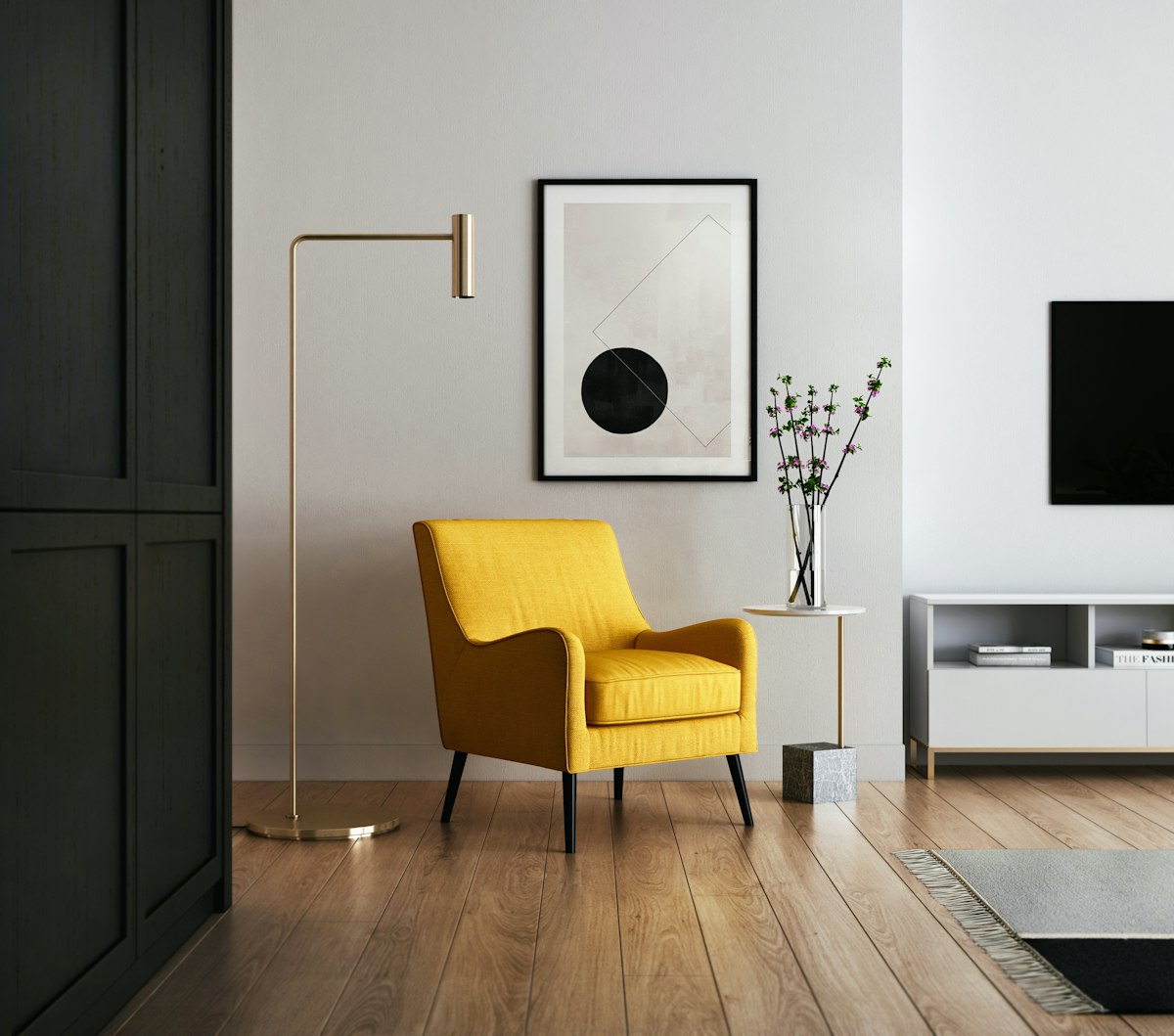
Minimalist living rooms have a reputation for being cold. Not temperature-cold, but emotionally cold. The kind of room that photographs beautifully and feels vaguely uninviting to sit in for three hours on a rainy Sunday. You do not want to put your feet on the coffee table. You are not sure you can touch anything.
This is a real problem, and it is not an inherent property of minimalism. It is a property of minimalism done wrong. The cold minimalist room fails in specific, diagnosable ways. Fix those failures and you get a room that is both uncluttered and genuinely pleasant to inhabit.
Why Minimalism Feels Cold
The cold minimalist room has a consistent pathology. It is usually one or more of the following:
The wrong white. Cool, blue-white walls paired with grey or white furniture. This palette is elegant in photographs and uncomfortable to live with. The human brain associates warmth with habitation and cool blue-white with institutional spaces. You can be as minimal as you like; if the palette is cool, the room will feel it.
No texture variation. Smooth surfaces everywhere. A smooth white sofa, smooth grey rug, smooth white walls, smooth concrete floor. When everything has the same surface quality, the room loses tactile interest. Texture is what makes a space feel like somewhere a human chose to be, rather than a showroom.
A single lighting source. Overhead only, frequently at full output. Flat, uniform light eliminates shadows, flattens surfaces, and creates the atmosphere of a space being inspected rather than inhabited. This is possibly the most common reason minimalist rooms feel cold.
Objects chosen entirely for appearance. A room full of visually correct objects that have no relationship to use, memory, or genuine pleasure. The purely styled room. These rooms photograph well and feel hollow in person because they have no relationship to the lives of the people who inhabit them.
The wrong kind of nothing. Empty space is essential. But empty space in a room with no texture, no warmth, and no layering is just vacancy. Negative space only works when the positive space is worth looking at.
The Cozy Minimalist Principles
Cozy minimalism is not a middle ground between two extremes. It is minimalism with its specific weaknesses addressed. These are the principles that resolve them.
Warmth in the Palette
The single most effective change in a cold minimalist room is shifting the palette toward warmth. This does not require repainting the room a deep caramel. It requires moving from cool to warm within the neutral register.
Cool neutrals: Stark white, cool grey, blue-grey, charcoal with blue undertones.
Warm neutrals: Off-white with yellow or pink undertones, greige, warm sand, warm clay, putty, cream.
The difference can be tested inexpensively. Purchase two small paint samples, one cool and one warm, and compare them on the wall over a few days and at different times of day. The shift from cool to warm, even within the neutral palette, transforms how a room feels.
Wood is the most effective warm neutral you can add. A pale oak floor, a walnut coffee table, a wooden shelf. Wood introduces warmth, variation, and organic texture in a single material. Rooms that feel cold despite careful design often have no wood in them.
Texture Layering
Texture is what gives a minimal room tactile richness. The goal is variation across the surfaces that the eye and hand encounter: a mix of rough and smooth, matte and slightly reflective, flat and dimensional.
The texture hierarchy for a cozy minimalist living room:
A good rug is the foundation. Not a thin, flat rug. Something with pile or weave: a wool rug with low-to-medium pile, a flatweave with texture, a seagrass or jute rug. The rug defines the seating area and establishes the room’s primary texture.
The sofa should have texture. Bouclé (the looped-yarn fabric enjoying its current moment) is effective because its surface catches light differently at different angles, creating visual warmth without pattern. Linen is excellent. Velvet works. Plain polyester is smooth and flat and does not contribute texture.
Cushions and throws should add texture variation from the sofa. A linen cushion on a bouclé sofa. A wool throw folded on the arm. A knitted cushion. The textures should be distinct from each other but in the same tonal family. Mixing textures within a consistent color palette creates richness without visual noise.
The coffee table and surfaces should contrast with the softness: a stone or wood tabletop provides a smooth, hard surface that reads against the textile textures and creates compositional variety.
Warm Lighting
This is transformative and underused in most homes. The lighting principles for a cozy minimalist living room:
Color temperature: 2700K for all sources in the room. No cool or neutral sources. This single change can rescue a room that is getting everything else right.
Multiple sources: Never rely on a single overhead fixture. A floor lamp. Table lamps. Possibly wall sconces. The overhead fixture should be on a dimmer and used at 20 to 40 percent in the evening. The lamps carry the room.
Lamp height: Table lamps with shades that bring the light to approximately shoulder height when seated. This puts the light source in a flattering position: below eye level, creating downward pools of warm light rather than overhead glare.
Candles. Not just as decoration. Lit candles in the evening (or, if preferred, quality LED candles that flicker) at table height or below add the warmest possible light source. At approximately 1800K, candlelight is the warmest light in the human experience. Even one or two candles change the ambient light quality perceptibly when the main lamps are dim.
Considered Objects
Cozy minimalism is not about removing all objects. It is about keeping only objects that have earned their place.
An object earns its place if:
- It is functional and used regularly
- It has emotional or historical significance
- It is genuinely beautiful to you (not just to a stranger’s eye) and you notice it with pleasure
- It relates to pleasure or sensory experience: a well-made book, a beautiful ceramic, a plant that is alive and thriving
The things that do not earn their place:
- Objects kept out of inertia
- Decorative items purchased because they filled a space
- Objects that are visually correct but that you have no particular feeling about
- Duplicates: six similar items where two would do
One lived-in object tells more about a room than ten curated ones. The book you are currently reading on the coffee table. The coffee mug on the side table. The plant you have grown from a cutting. These are what make a room habitable rather than staged.
The Right Amount of Stuff
This is the hardest part to calibrate, because “the right amount” varies by person, by room, and by how tidy the household naturally runs.
A useful principle: everything in the room should be visible in its best state at all times. If an object needs to be put away to make the room look right, the room has too many objects. If the room looks right with normal everyday use in it (the book, the blanket, the glass of water), it has the right amount.
For a living room, the working range:
- Seating for the household plus two to four guests
- One coffee table or ottoman
- One or two side tables
- One primary light source (pendant or floor lamp)
- Two table lamps or additional accent sources
- One rug
- Three to five cushions
- One or two throws
- A small number of considered objects on surfaces: five to eight total, including plants
This sounds sparse. It is slightly sparse, which is the point. Slightly sparse reads as intentional. Slightly overfull reads as accumulated.
Common Mistakes
Buying all furniture at once from the same collection. Matchy-matchy furniture creates rooms that look like a showroom: everything correct and nothing personal. Pieces from different periods, materials, and sources create a room that feels assembled over time, which is more human.
Rugs that are too small. The rug should extend under all the front legs of the seating furniture. A rug that stops short of the furniture creates a disconnected composition where the seating appears to float. The rug defines the conversation zone; if it does not include the furniture, the zone collapses.
Gallery walls in minimalist rooms. A gallery wall and minimalism are not compatible. A single large piece of art, or two smaller pieces with significant space between them, is consistent with minimal aesthetics. Multiple pieces compete with the calm the room is trying to create.
Plants that are not thriving. A healthy, thriving plant is one of the most life-affirming objects in a room. A yellowing, struggling, or dead plant is the opposite. Be honest about which plants you can keep alive in your home’s light conditions. One healthy plant is worth more than five struggling ones.
Accent colors that are too bright. A warm neutral palette with a deep terracotta cushion, sage throw, or dusty blue vase is consistent with cozy minimalism. The same palette with a bright orange cushion or electric blue vase introduces contrast that fights the quietness the room is working toward. Keep accent colors in their muted, dusty register.
Coffee tables at the wrong height. The coffee table should be within an inch or two of the height of the seat cushion. A table that is too low requires bending at an uncomfortable angle to reach it. Too high and it feels like a dining table in the living room. Most people use tables that are too low.
The Edit Process
If you are working with an existing room rather than starting from scratch, the process runs in reverse: remove before you add.
Step one: remove everything from the room that is not furniture or fixed to the wall. Everything. All objects, cushions, plants, books. This is extreme and temporary.
Step two: assess the bones. With the room emptied, you can see what the furniture, lighting, and palette are doing. Are the walls warm or cool? Is the furniture comfortable? Is the lighting adequate?
Step three: return items selectively. Bring back only what you consciously decide to include. Anything you do not actively return to the room does not belong there.
Step four: add what is missing from the cozy minimalist principles. Warmth, texture, adequate lighting.
This process typically results in a room with 30 to 50 percent fewer objects than it started with. The objects that return are the ones that matter.
The Room That Changes With You
One advantage of the cozy minimalist approach is that rooms assembled this way are relatively easy to evolve over time. There are fewer objects to manage. The foundational pieces (sofa, rug, lighting) are quality items that age well. The textiles and smaller objects change seasonally or as tastes shift without disrupting the room’s overall composition.
Buy the sofa and the rug well. Let the smaller objects evolve. A good sofa in a quality neutral textile can be refreshed entirely by changing cushions and throws. A good rug can carry multiple furniture arrangements. The investment in foundations pays dividends in flexibility.
The Bottom Line
Cozy minimalism is not a compromise between two competing aesthetics. It is minimalism executed with attention to warmth. The cold minimalist room has a specific set of failures: cool palette, absent texture, inadequate layered lighting, and objects chosen for visual correctness rather than genuine meaning.
Fix those failures systematically. Shift toward warm neutrals and wood. Layer texture from the rug up. Install 2700K lighting on dimmers and supplement with lamps. Keep only objects that have earned a place. Return the room to a state where normal daily use, the book, the blanket, the mug, fits comfortably within it.
The result is a room that photographs less dramatically than a pure minimalist space and is significantly more pleasant to spend a Sunday in. That is the correct trade.