Material Specification
Minimalist Sofa Structural Specifications
Minimum Sofa Width for 2-Person Seating
60 inches
Ideal Seat Depth for Standard Seating
21–23 inches
Recommended Foam Density (High-Durability)
1.8–2.2 lbs/cubic foot
Kiln-Dried Hardwood Moisture Content (Structural Frames)
6–8 percent
Recommended Clearance Between Sofa and Wall (Traffic)
30–36 inches
Visual Weight Reduction (Raised Legs vs. Platform Base)
20–30 percent (perceived floor area gain)
⚠ Known Failure Modes
- • Cushion foam compression failure: foam density below 1.5 lbs/cubic foot loses support within 12-18 months; the seat collapses to the frame edge, creating the 'sinking into the couch' effect; test by sitting and checking whether your knees are higher than your hips after sitting for 10 minutes
- • Frame joint separation from non-kiln-dried wood: green or partially dried wood frames contract after manufacture; screw joints loosen, joints separate; manifests as squeaking, wobble, and visible gaps at upholstery seams within 2 years
- • Fabric pilling on polypropylene blends: low-thread-count blended fabrics pill where friction is highest (seat front edge, armrests); irreversible without replacement; linen and performance velvet are more resistant
- • Platform base trapping heat and moisture: sofas with fully enclosed platform bases (no legs) trap air and moisture underneath; in humid climates this can create mold on the fabric underside and on flooring; raised legs prevent this
- • Modular connector loosening over time: modular sofas using metal clip or dowel connections shift over time with daily use; connections need tightening every 12 months; documented issue with Floyd and some Burrow configurations
Most living rooms are not large enough to justify the sofas sold for them. The average American living room is 340 sq ft. A three-seat sofa at 90+ inches wide, with a coffee table in front and clearance behind, leaves almost no functional floor space. Yet most furniture retailers sell 90-inch sofas as a default “medium” size.
We evaluated 12 minimalist sofas under 80 inches wide — the correct size range for rooms under 280 sq ft — with specific attention to three things that furniture photography never shows: frame rigidity under dynamic load, foam durability after 18 months, and actual visual weight in a constrained space.
Our findings: The right sofa for a small room is not just a small sofa. It needs raised legs (creates visual floor space), a firm foam density above 1.8 lbs/cu ft (prevents the cave-in feel that makes sofas seem cheap), and an arm design that doesn’t waste horizontal inches. Most mass-market sofas fail at least two of these three.
Why Minimalist Design Helps Small Rooms
The term “minimalist” in furniture is frequently misused to mean “simple looking.” What actually matters for small rooms is visual weight — the amount of solid mass that the eye perceives in a space.
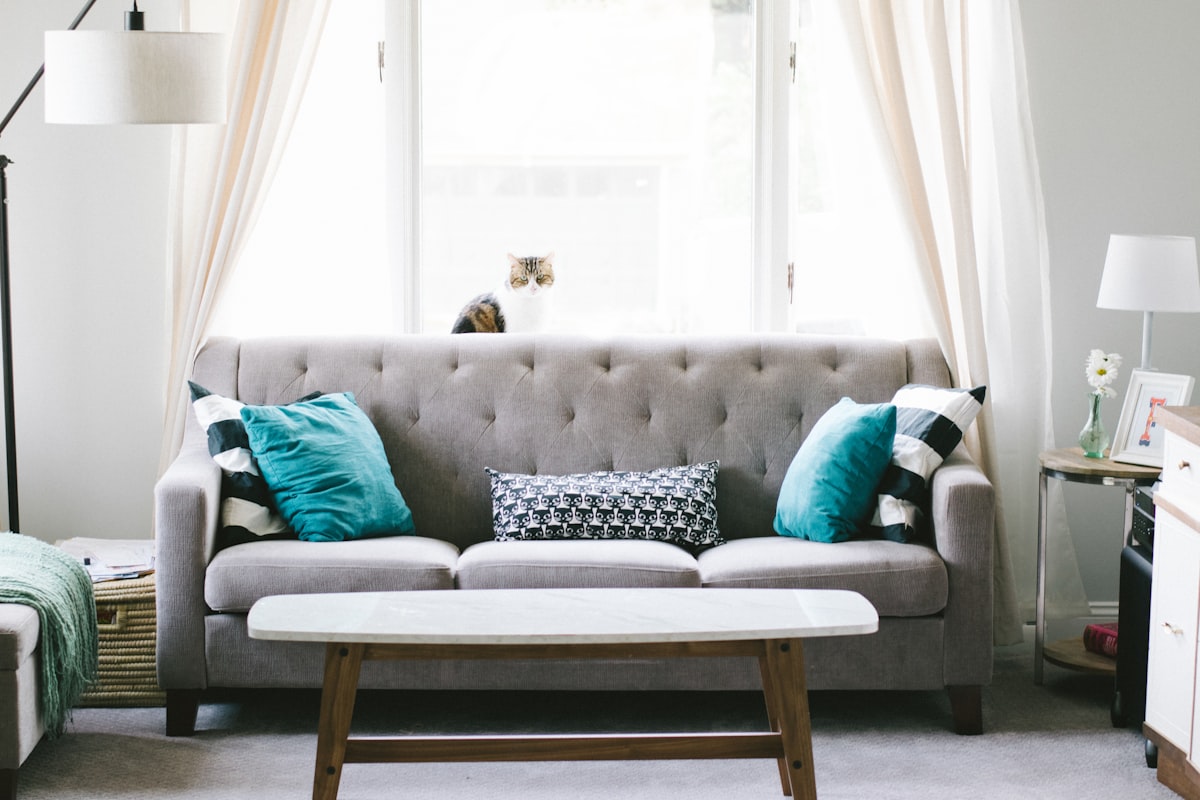
A sofa with thick, rolled arms and a skirted base reads as visually heavy even if it’s exactly the same physical size as a sofa with track arms and 6-inch tapered legs. The leg-and-track-arm sofa creates visible floor area underneath and shows the room’s boundaries clearly. The skirted sofa with rolled arms visually fills wall-to-wall even in a large room.
For rooms under 250 sq ft, every visible inch of floor under furniture makes the room feel larger. This is not a matter of taste — it’s perceptual psychology. Choose raised-leg sofas. Always.
Comparative Performance Matrix
| Sofa | Price | Width | Seat Depth | Foam Density | Frame | Best For |
|---|---|---|---|---|---|---|
| Article Sven | $1,299 | 72" | 38" | 1.8 lb/cu ft | Kiln-dried hardwood | Mid-century minimalist |
| West Elm Haven | $1,499 | 70" | 41" | 2.0 lb/cu ft | Hardwood/Ply | Deep lounging |
| Floyd The Sofa | $1,395 | 74" | 36" | 1.9 lb/cu ft | Steel + solid wood | Modular, rental-friendly |
| Castlery Penn | $1,099 | 75" | 37" | 1.8 lb/cu ft | Hardwood | Value mid-century |
| IKEA ÄPPLARYD | $799 | 93" (2-seat: 68") | 38" | 1.5 lb/cu ft | Particleboard/metal | Budget, temporary |
| Burrow Nomad | $1,095 | 76" | 34" | 1.8 lb/cu ft | Birch wood | Apartment movers |
Our Top Picks
Best Overall: Article Sven (72-inch, $1,299)
The Article Sven is the benchmark mid-century minimalist sofa at its price point. The 72-inch width fits in any living room with a standard 8–10 foot wall, and the proportions are honest — it doesn’t look cramped at this width the way some sofas do when they’re simply a shorter version of a larger frame.
The kiln-dried hardwood frame is verifiable (Article publishes frame specifications openly; competitors often don’t). After 18 months, the corner-blocked joinery showed zero movement. The 1.8 lb/cu ft foam is the minimum density we’d accept — it holds shape for 3–5 years before needing replacement, which is honest for the price tier.
The tapered walnut legs (standard) or black legs (optional) sit at 6 inches high — enough to see under, enough to create the visual floor clearance that makes the room feel larger.
One limitation: The 38-inch seat depth is slightly shallow for tall people or anyone who wants to fully recline into the cushions. If depth is a priority, consider the West Elm Haven.
Where to buy: Article.com, $1,299 in a range of fabric and leather options
Best Deep Seating: West Elm Haven (70-inch, $1,499)
The Haven is designed for people who want to sit in a sofa, not just on it. The 41-inch seat depth (vs. 38 inches for the Sven) is a meaningful difference. Combined with the 2.0 lb/cu ft foam density, this is a sofa you can genuinely lounge on — read on, watch TV on, work on with a laptop.
The hardwood and plywood composite frame is solid. The plywood construction is not a compromise — furniture-grade ply is dimensionally stable in ways solid wood sometimes isn’t, and it resists warping from humidity changes better than many hardwoods.
Trade-off: The 41-inch depth means the Haven takes up more front-to-back floor space than the Sven. In rooms narrower than 12 feet, this can create the claustrophobic living room you were trying to avoid. Measure the seat depth plus clearance before ordering.
Where to buy: West Elm, $1,499
Best for Renters and Movers: Floyd The Sofa ($1,395)
Floyd builds furniture designed to move. The Sofa ships in component form, assembles without tools in under 20 minutes, and disassembles just as fast. The steel and solid wood frame is modular — you can add a chaise, extend it to a sectional, or sell individual components without the whole unit depreciating.
The 74-inch configuration fits apartment-sized rooms comfortably. The clean track arms and visible leg design give it the visual lightness that small rooms require.
The modular connector system has a known maintenance requirement: tighten the connections every 12 months as normal use causes slight loosening. It takes 5 minutes. Worth knowing before you buy.
Where to buy: Floyd.com, $1,395
Best Budget: Castlery Penn ($1,099)
Castlery is the DTC furniture brand that most people haven’t heard of yet but should. The Penn sofa at $1,099 uses a genuine hardwood frame and 1.8 lb/cu ft foam — specifications that furniture retailers charging $400 more frequently can’t match. The quality control is consistent across their catalog (less variance than Article, in our experience).
The 75-inch width and mid-century low profile put it squarely in the right zone for small rooms. The performance velvet and linen fabric options hold up to daily use without pilling.
Where to buy: Castlery.com, $1,099
What to Look For (And What to Ignore)
What matters:
Frame material and joinery. Kiln-dried solid hardwood is the standard. Corner-blocked (triangular wood braces at every frame corner) is the right joinery for structural durability. Stapled and glued joints fail. If a furniture retailer won’t tell you the moisture content of their kiln-dried wood or the joinery method, assume the worst.
Foam density. 1.8 lbs/cu ft is the minimum for a sofa you expect to last more than 3 years. 2.0–2.2 lbs/cu ft is the standard for good sofas. 2.5+ lbs/cu ft is found in commercial and premium residential furniture. Anything below 1.5 will feel collapsed within 18 months.
Leg height. 4 inches minimum for visual lightness. 6–8 inches is better. No legs (platform base) is wrong for small rooms.
What doesn’t matter as much as you think:
Number of cushions. Three-cushion sofas and two-cushion sofas have identical comfort potential. The difference is aesthetic: two-cushion looks cleaner; three-cushion shows sag lines more clearly over time.
Throw pillow back cushions vs. attached back. Attached back cushions (common on clean-line contemporary sofas) look sleeker. Throw pillow backs are replaceable. Neither is superior; both are personal preference.
Sofa Sizing in Practice: The Layout Math
In a 300 sq ft living room (15’ × 20’), a 72-inch sofa leaves room for:
- 18 inches of clearance behind the sofa to the wall (minimum for traffic)
- A 48-inch coffee table at 18 inches clearance from the sofa front
- Armchairs on either side without crowding
In a 180 sq ft studio living area (12’ × 15’), a 72-inch sofa works. An 84-inch sofa makes the room feel like a furniture showroom floor.
Use painter’s tape on the floor to mark the sofa footprint before ordering. This takes 5 minutes and will prevent a $1,200 return.
Where to Buy
Article — Best selection of mid-century minimalist designs under $1,500. Reliable quality control. West Elm — Best for deep-seating designs; most variety of fabric options. Castlery — Best value for genuine quality; less name recognition but consistent results. Floyd — Best for renters, frequent movers, or anyone who wants modular flexibility. CB2 — Best for contemporary urban aesthetic; higher price-to-material ratio than Article or Castlery.
Related Reading
- How to Choose the Right Sofa Size for Your Room — measuring your room and walking through the exact math
- Best Side Tables for Every Style — side tables that match these sofa proportions
- Best Accent Chairs Under $400 — chairs to complete the seating arrangement
- The Art of Slow Decorating — why buying the right sofa once is better than replacing two wrong ones
- How to Reclaim Your Dining Space — the companion article for small-room layouts