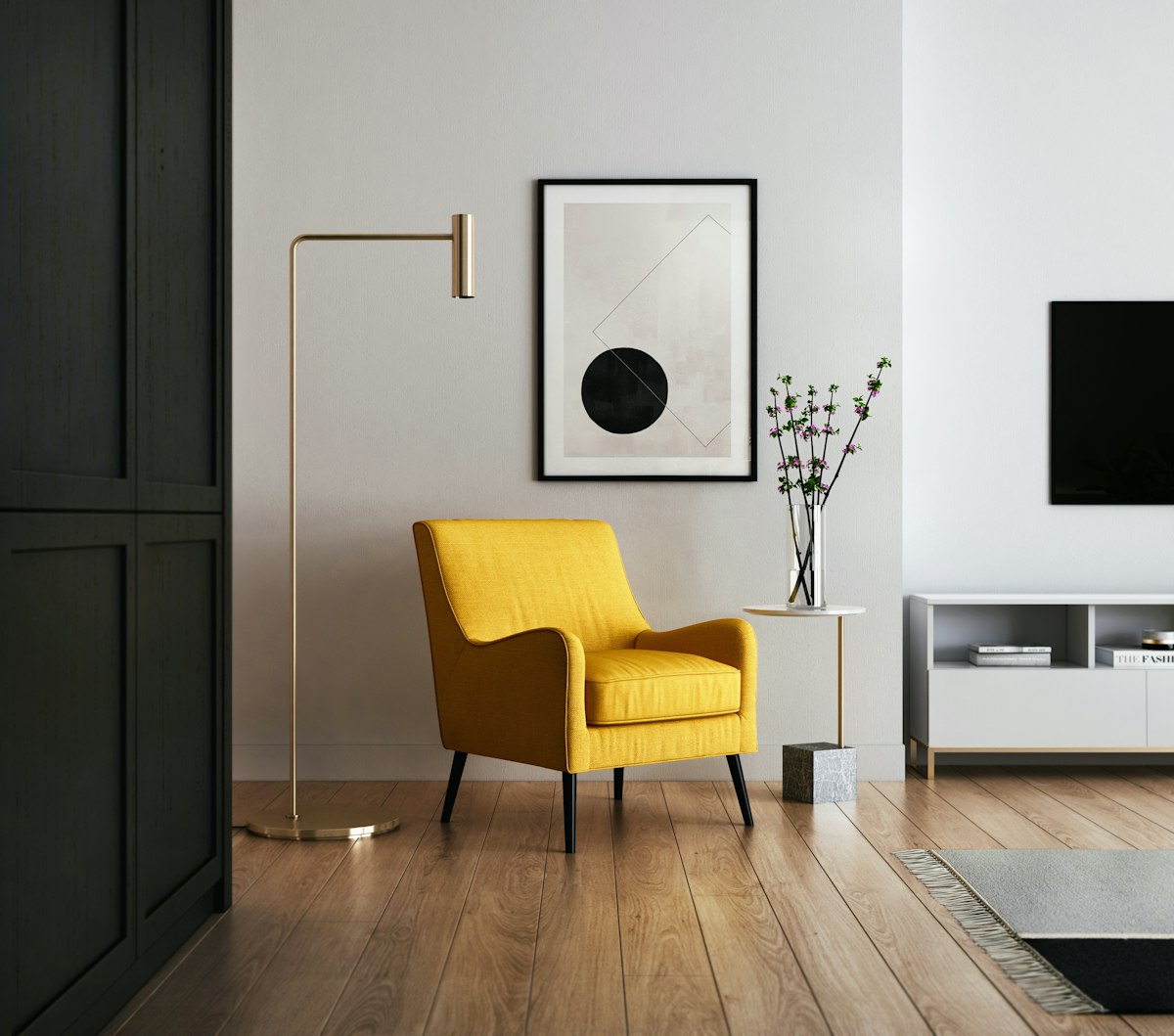
The rug is often the last thing people buy when furnishing a living room, and it is typically undersized. A rug that is too small is the single most common mistake in furnished living rooms. It makes the room look unfinished, disconnects the furniture from the floor plane, and reduces the visual size of the room rather than expanding it.
Getting rug placement right — size, position, and orientation — is one of the highest-leverage changes you can make to a living room without replacing any furniture.
The Size Problem
Before placement, size. The default for most buyers is too small.
The most common mistake: Buying a 5x8 rug for a living room that needs an 8x10 or 9x12. The result is a rug that floats in the middle of the furniture arrangement like an island, visually disconnecting the seating from the floor.
How to choose the right size:
The rug should be large enough to anchor the entire seating area. As a starting point, measure from the outer edges of your sofa to the outer edge of the arrangement, then add 18–24 inches on each side. That is your minimum rug size.
Standard rug sizes and their applications:
| Rug Size | Room It Works In |
|---|---|
| 5x8 | Small rooms under 12x14 ft, or as a layering piece under a larger jute |
| 8x10 | Medium living rooms, seating arrangements up to ~3m sofa |
| 9x12 | Large living rooms, substantial seating arrangements |
| 10x14 | Large, open-concept living rooms |
| Custom / oversized | Open-floor plans, great rooms |
When in doubt, go larger. No one has ever said their rug was too big. Many have regretted going too small.
The Three Placement Configurations
There are three accepted approaches to rug placement under a seating arrangement. All three work. The choice depends on rug size and room dimensions.
All Legs On
All furniture legs sit on the rug. This is the most cohesive look and requires the largest rug.
With all legs on, the rug must extend at least 6–8 inches beyond the front legs of the sofa on each side. For a typical three-seat sofa this means an 8x10 or 9x12 rug at minimum.
When to use it: Larger rooms where you can accommodate the rug size. Open-concept spaces where you want the rug to clearly define the seating zone. This configuration makes the room feel most unified.
Front Legs Only
Only the front legs of each piece sit on the rug, with the back legs on the bare floor. This is the most widely used configuration because it creates cohesion with a smaller rug than “all legs on” requires.
The key: all pieces in the arrangement must have their front legs on the rug. If the sofa’s front legs are on but the armchairs’ legs are entirely off, the arrangement looks disconnected.
When to use it: Most living rooms. It works with a 8x10 in a medium room. It grounds the furniture without requiring an oversized rug.
Common error: Placing only the sofa’s front legs on the rug while the chairs remain entirely off. This creates a hierarchy where the sofa belongs to the room and the chairs float.
All Legs Off
All furniture legs sit on the bare floor with the rug positioned as an island in the center. This works only in very specific circumstances: a very large room where the seating arrangement is far from the walls, or when used as a layering piece under another rug.
In most living rooms, all legs off makes the rug feel like a decorative mat rather than an anchoring element. It tends to make the room look smaller, not larger.
When to use it: Rarely. Large open-concept lofts or studios where the seating floats freely in a large space. As part of a rug-on-rug layering strategy.
Placement Relative to the Coffee Table
The rug should extend beyond the coffee table on all sides (or at least the sides facing the seating). A rug that is exactly coffee table size reads as a table covering, not a room anchor.
Standard guidance: the rug should extend at least 12–18 inches beyond the coffee table edges facing the seating. The edges facing the walls can be closer to the furniture leg line.
Orientation
The rug’s orientation should align with the room’s primary axis — typically the same direction as the longest wall or the dominant furniture arrangement.
In a rectangular room with a sofa on the long wall, the rug runs long-side parallel to the sofa.
When to break this rule: A square room benefits from a slightly off-axis rug placement to create visual interest. Angling the rug 5–10 degrees can add dynamism to an otherwise static arrangement. This technique works best with patterned rugs where the offset is visible.
Rug and Fireplace
When a fireplace is the room’s focal point and the sofa faces it, the rug should extend far enough to anchor both the sofa and the coffee table. The front edge of the rug should not sit between the fireplace hearth and the furniture — it should be between the furniture and the center of the room, with the hearth at or just beyond the far edge.
If the fireplace has a raised hearth, leave 6 inches of clearance between the rug edge and the hearth for safety.
Layering Rugs
Layering rugs — placing one rug on top of another — adds visual texture and allows a smaller statement rug to work over a larger neutral base.
The standard approach: A large, flat-weave or natural fiber rug (jute, sisal, or flatweave cotton) as the base. A smaller, more textural or patterned rug centered on top.
Guidelines for layering:
- The base rug should follow standard sizing rules (large enough to anchor the seating)
- The top rug should be smaller — typically 2–4 feet shorter on each dimension
- The base rug should be neutral in color and relatively flat in texture
- The top rug carries the pattern, color, or texture
Layering also solves the “found a rug I love but it’s not big enough” problem. Put it on a neutral jute base and it becomes the right size.
Common Orientation Errors
The centered-but-not-anchored rug: A rug placed in the geometric center of the room rather than under the seating arrangement. If the furniture is in one part of the room and the rug is in the center, they are not in conversation.
The angled rug in a rectangular room: Diagonally angled rugs in rectangular rooms look like placement mistakes, not design decisions — unless the furniture is also angled (unusual in living rooms).
The rug that stops at the sofa: When the rug’s front edge is exactly at the front sofa leg line with nothing extending toward the coffee table, the arrangement looks truncated. Extend the rug toward the center of the arrangement.
How to Test Size Before Buying
Rug shopping is difficult because the showroom scale is never the room scale. Before buying, test your intended size.
The masking tape method: Mark the rug’s planned dimensions on your floor with painter’s tape. Live with it for a day. You will immediately see whether it is too small, too large, or misaligned with the furniture.
The newspaper method: Cover the floor within the tape outline with newspaper or craft paper to simulate the visual mass of a rug. More effort but gives a better sense of coverage.
Both methods have saved many people from the expense of returning a rug that didn’t work.
What to Do with an Existing Undersized Rug
If you have a rug that is too small, you have options short of replacement:
- Layer it: Place it on a larger neutral jute rug. The combination works if the rug has some visual interest.
- Float it differently: If the rug is too small to anchor the seating, reposition it as a standalone piece between the coffee table and fireplace, or under a side table as a deliberate accent.
- Move it to a room where its size is appropriate: A 5x8 that is too small for the living room may be exactly right in a small office or bedroom.
The one thing that does not work: leaving an undersized rug under the furniture where it is clearly not large enough. It reads as a mistake rather than a choice.
The Bottom Line
The right rug size is larger than you think. The right placement is front legs on (for most rooms) or all legs on (for larger rooms). The right orientation follows the room’s primary axis.
Get the size right first. Placement follows naturally once you are working with a rug that is appropriate for the space.