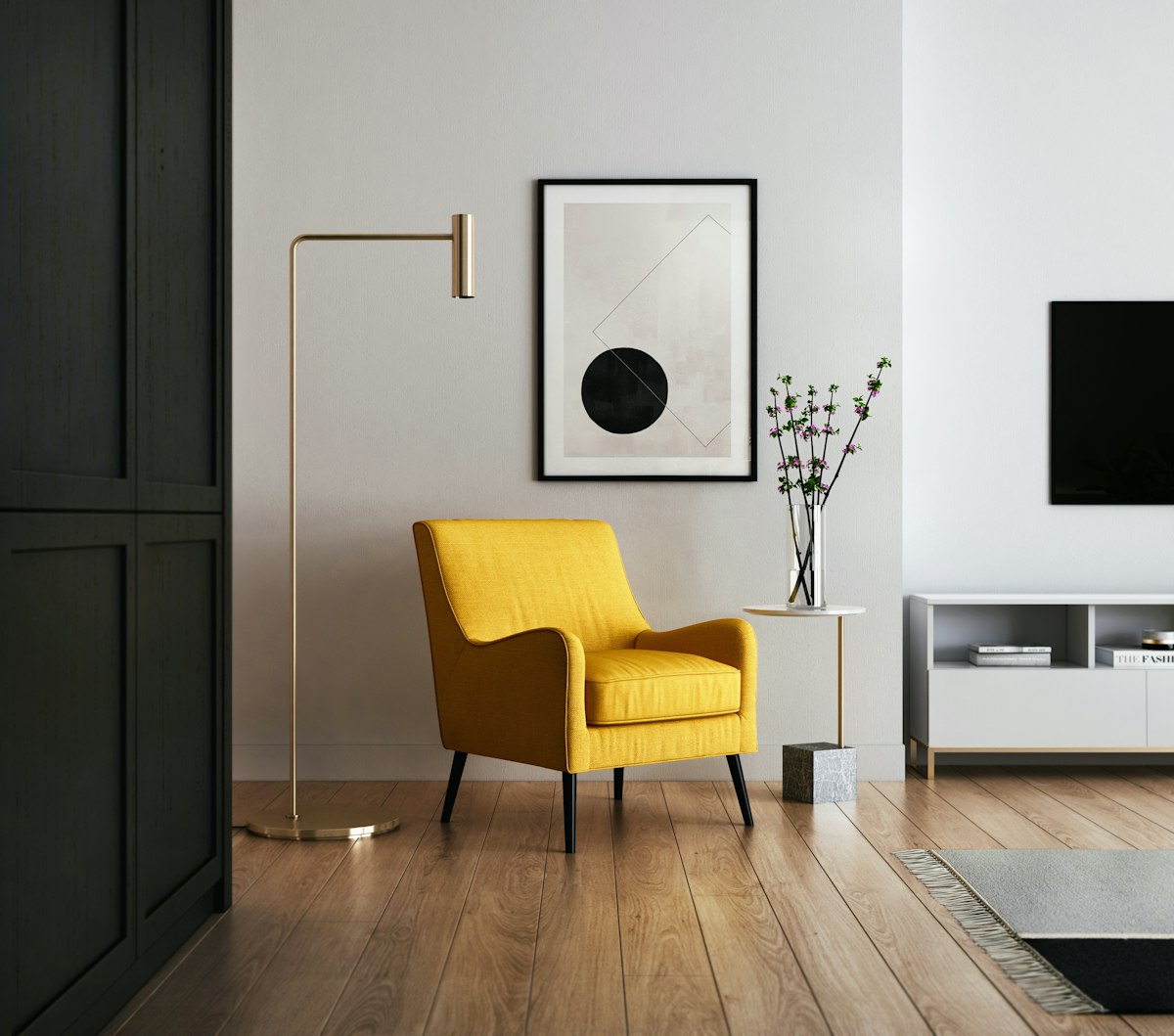
The accent wall had a rough decade. Too many half-hearted paint choices, too many focal walls in the wrong color, too much contrast for its own sake. But done well — meaning with purpose and the right material — an accent wall solves real design problems. It anchors furniture arrangements, adds depth to shallow rooms, and introduces texture without the commitment of treating all four walls.
Here’s what works, room by room, and the products worth considering for each approach.
What Makes an Accent Wall Work
Before choosing a wall, choose the reason. An accent wall earns its place when it:
- Anchors a furniture grouping — the wall behind a sofa or bed defines the primary focal point
- Adds depth to a flat room — a darker or textured surface on the back wall of a short room makes it feel deeper
- Covers an imperfect surface — paneling or wallpaper can salvage a wall with minor damage or uneven texture
- Creates architectural interest — in a room without moldings, built-ins, or other detail, a feature wall provides the detail
It fails when it’s a random wall that happens to be a different color with no furniture or function anchoring it.
Paint Accent Walls: The Right Approach
Paint is the most accessible approach and the most frequently botched. The common mistake is choosing a color that’s dramatically different from the rest of the room without any material transition — just a line of tape where one shade ends and another begins.
What works:
- Deep, saturated tones behind a bed or sofa — a deep teal, forest green, charcoal, or terracotta creates a backdrop that makes furniture feel intentional rather than floating
- Monochromatic depth — painting an accent wall two to three shades darker than the adjacent walls, all in the same color family, creates depth without jarring contrast
- Ceiling-to-floor treatment — painting an accent wall the same color from the baseboard to the ceiling, without breaking at the crown molding, reads as cleaner and more contemporary than stopping at the molding line
Products: Benjamin Moore Aura in Newburyport Blue (HC-155), Farrow & Ball Railings (No.31), Sherwin-Williams Iron Ore (SW7069), and Clare Paint’s offering in colors like Cig Break or Wallflower all produce accent walls that feel considered rather than trendy.
Limewash and Textured Paint
Limewash is having its moment because it solves the flatness problem that standard paint can’t. It creates natural variation in tone and texture that makes a single wall look intentional even without furniture in front of it.
Portola Paints and Romabio both make limewash formulas that can be applied by a non-professional with practice. The application involves layering and wiping back, which is more involved than standard painting but not dramatically harder. The result on a living room or bedroom accent wall reads as Old World without being fussy.
Stucco or microcement-look paint achieves a similar effect with a more contemporary, less rustic tone. Novacolor and Tierrafino make plaster-look paint formulas that create a smooth, slightly textured surface appropriate for modern interiors.
Shiplap and Board and Batten
Wood paneling applied horizontally (shiplap) or vertically with flat boards and trim (board and batten) adds architectural detail to rooms that don’t have it. It works particularly well in:
- Bedrooms — the wall behind the bed gains structure; the headboard or bed frame reads as intentionally centered against the paneling
- Entryways — lower half board and batten is a classic foyer treatment that adds formality and hides scuffs at door-height
- Home offices — horizontal shiplap on the wall behind a desk gives video call backgrounds depth and texture without distracting patterns
DIY boards: MDF primed boards from a hardware store, cut to width and installed with construction adhesive and a nail gun, are the standard DIY approach. White-painted board and batten runs $200–500 in materials for a standard bedroom wall. Finished in Benjamin Moore Chantilly Lace or Sherwin-Williams Extra White, it reads as a finished, custom detail.
Pre-made panels: STIKWOOD and Wayfair both carry peel-and-stick or tongue-and-groove paneling that installs without carpentry skills. The look is slightly less substantial than site-built paneling but works well for renters or quick installations.
Wallpaper Feature Walls
Wallpaper on a single wall avoids the commitment (and cost) of papering an entire room while still delivering pattern and depth. The key constraint is scale: in a bedroom, the wall behind the bed is the only one that reads as intentional. In a living room, the wall behind the sofa.
What holds up: Botanical prints, textural grasscloth, geometric patterns in two tones (not high-contrast multicolor), and abstract designs that suggest texture more than pattern. These read as considered; large floral prints and very literal motifs tend to feel more dated.
Sources: Rifle Paper Co., Hygge & West, Tempaper (peel-and-stick, good for renters), and Schumacher’s more subdued lines all offer accent-wall-appropriate patterns. Expect to spend $80–250 per roll for quality wallpaper; a standard bedroom accent wall typically needs 3–5 rolls depending on repeat.
Peel-and-stick options: Tempaper and NuWallpaper have improved significantly. They’re not identical to traditional wallpaper in texture and weight, but for an accent wall behind a bed — where you’re rarely running your hand along the surface — the difference is minimal visually.
Stone and Tile Accent Walls
Stone veneer or large-format tile on a living room wall, fireplace surround, or bathroom feature wall adds material interest that no paint can replicate. This is a higher commitment and higher cost approach, but it’s also the most durable.
Living rooms: Thin stone veneer panels (Z-Stone, Realstone Systems) applied to a wall behind a TV or flanking a fireplace add texture and weight to a room. They install with mortar over drywall and look finished without grout lines.
Bathrooms: A single wall of large-format tile (24x48 or 36x36) behind a freestanding tub or at the back of a shower creates a spa-like focal point. Porcelain in concrete or stone looks — Atlas Concorde’s Marvel series or Florim’s Stone Talk — works particularly well.
Living Room Accent Wall Ideas
The wall behind the sofa is the primary focal point in most living rooms. Options in rough order of commitment:
- Deep paint color (lowest commitment, $50–100) — works immediately, easy to change
- Limewash or textured paint — one weekend project, durable finish
- Wallpaper — 2–3 hour installation per wall, high visual impact
- Shiplap or board and batten — weekend project with basic tools, significant architectural impact
- Tile or stone veneer — professional installation recommended, permanent
Bedroom Accent Wall Ideas
The wall behind the headboard is the canonical bedroom accent wall. A few approaches that work especially well in bedrooms:
- Fabric or upholstered panels — applied directly to the wall or built as a frame, upholstered panels add warmth and sound absorption. Pairs well with fabric headboards.
- Paint in a saturated color — deep green, dusty blue, charcoal, terracotta — behind a bed transforms the entire room’s mood without requiring new furniture
- Wallpaper in a botanical or textural pattern — makes the bed feel like it was designed around the wall
What to Avoid
- More than one accent wall in a room — one focal point, not two
- High-contrast colors without material reason — orange in a neutral room rarely looks intentional
- Stopping accent wall treatment at the crown molding (for paneling) — take paneling or shiplap to the ceiling for a cleaner result
- Accent walls on walls with windows or doors — broken surfaces make the treatment look awkward; solid, uninterrupted walls read better
The best accent wall is one that looks like it belongs to the room rather than being added to it. Anchor it to the furniture, choose a material suited to the room’s use, and the result holds up longer than any passing trend.