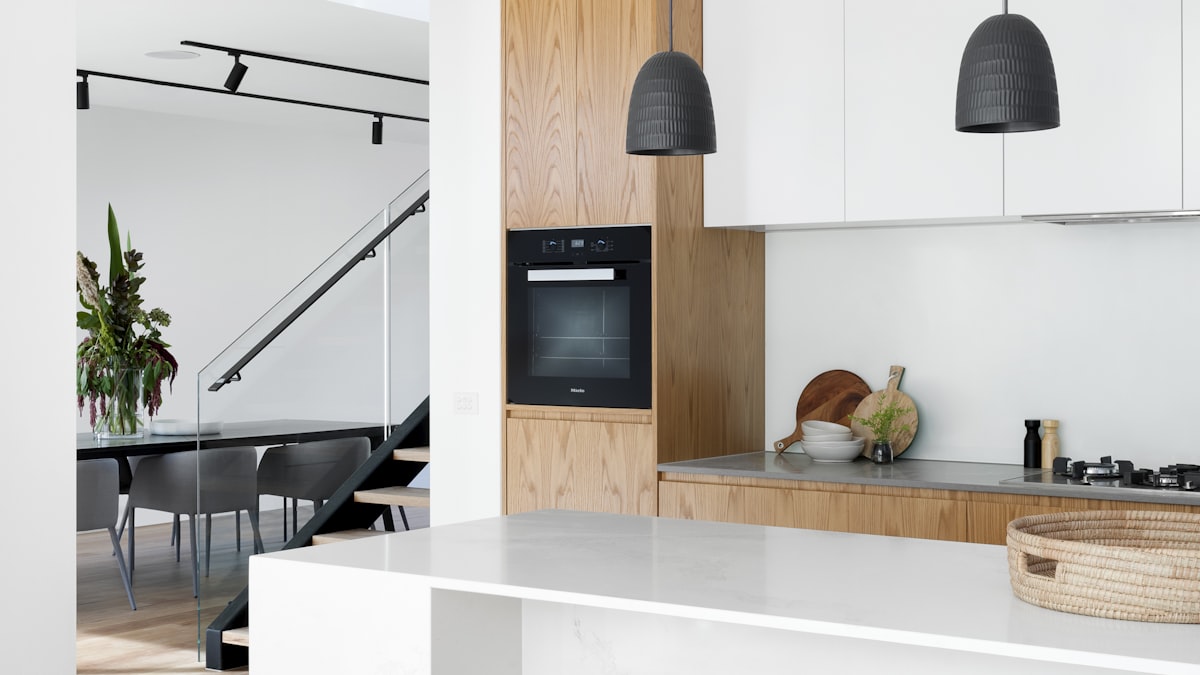
Pick Based on Your Ceiling and Budget
Recessed lighting delivers the cleanest look but requires ceiling access and professional installation. Track lighting offers the most flexibility for the least commitment. Surface mount fixtures provide the most decorative impact with the simplest install.
Those three sentences cover the core decision. The rest of this guide explains when each type makes sense, what they cost, how they install, and where people go wrong with each one.
Lighting is the single most impactful element in any room. More than paint. More than furniture. More than art. A room with great furniture under bad lighting feels wrong. A room with basic furniture under great lighting feels inviting. Yet most homes have a single overhead fixture selected by a builder who prioritized cost over aesthetics.
Recessed Lighting (Downlights)
Recessed lights sit inside a hollow opening cut into the ceiling. Only the trim ring and the light source are visible from below. Everything else hides above the ceiling plane.
Why People Choose Recessed Lighting
The appeal is clean minimalism. No fixture hangs below the ceiling. No decorative element competes with the room’s other design choices. Recessed lighting disappears into the architecture, providing ambient illumination without visual clutter.
Recessed lights work best for general ambient lighting in modern and minimalist interiors. They are the default choice in new construction for kitchens, hallways, bathrooms, and living rooms where a clean ceiling plane is the goal.
How Recessed Lighting Works
Each fixture consists of three components: the housing (the metal can that sits above the ceiling), the trim (the visible ring that sits flush with the ceiling surface), and the light source (typically a retrofit LED module or an integrated LED wafer).
Modern LED wafer lights have largely replaced traditional can housings. A wafer light like the Halo HLC 6-inch ($18 at Home Depot) is only 0.5 inches (1.3 cm) thick. It mounts directly to a junction box and does not require the 7 to 8 inches of plenum space that old-style housings demand. This means recessed lighting is now possible in ceilings with shallow joist cavities, drop ceilings, and even some concrete applications.
Installation Requirements
- Ceiling access is mandatory. Either from above (attic) or by cutting into drywall.
- Each light needs a junction box or a direct wire connection.
- Spacing follows the “half the ceiling height” rule. For an 8-foot (2.4 m) ceiling, space recessed lights roughly 4 feet (1.2 m) apart for even coverage.
- A licensed electrician is recommended. Cutting ceiling holes and running new wiring involves building codes, load calculations, and potential insulation contact ratings (IC-rated vs. non-IC-rated housings).
Cost Breakdown
| Component | Cost Range |
|---|---|
| LED wafer fixture | $12 to $30 each |
| Traditional can housing + retrofit LED | $20 to $50 each |
| Electrician installation (per fixture) | $75 to $200 |
| Typical living room (6 fixtures) | $500 to $1,500 total installed |
The fixtures themselves are cheap. The labor is where the cost lives. A six-light recessed layout in an existing ceiling (not new construction) typically runs $800 to $1,200 with electrician labor in most US markets.
Where Recessed Lighting Falls Short
Recessed lights are permanent. Once the holes are cut, they stay. Rearranging furniture and deciding the light is now in the wrong spot means either living with it or patching drywall and cutting new holes.
They also provide only downward light. A room lit exclusively by recessed cans feels flat and cave-like. The light pushes down, creating shadows under shelves, on faces, and in corners. Recessed lighting needs supplemental sources (floor lamps, table lamps, wall sconces) to feel complete.
Track Lighting
A track system consists of an electrified rail mounted to the ceiling. Individual light heads click into the track at any point and can be repositioned, aimed, and swapped without tools.
Why People Choose Track Lighting
Flexibility is the entire value proposition. Moving an apartment? Take the track. Rearranged furniture? Re-aim the heads. Hung new art? Point a light at it. No other ceiling fixture type offers this level of adaptability.
Track lighting runs off a single junction box. One electrical connection powers the entire track, and the track distributes power to however many heads are attached. This makes it ideal for older homes and apartments with limited electrical infrastructure.
Track System Types
Three track standards exist. They are not interchangeable.
| System | Compatibility | Notable Feature |
|---|---|---|
| H-type (Halo/Juno) | Most common in US residential | Widest variety of compatible heads |
| J-type (Juno proprietary) | Juno brand only | Slightly different contact configuration |
| L-type (Lightolier) | Lightolier brand only | Less common, being phased out |
Buy the H-type system unless there is a specific reason not to. It has the widest accessory ecosystem and the most available replacement heads. The Hampton Bay 4-foot linear track kit ($30 at Home Depot, includes 3 heads) is a solid entry-level option.
Modern Track vs. Industrial Track
Track lighting’s reputation for looking industrial is outdated. Modern track systems from brands like WAC Lighting and Tech Lighting feature slim, low-profile rails and compact LED heads that look nothing like the bulky chrome tubes from the 1990s.
The WAC Lighting Charge series ($180 for a 4-foot track with 3 LED heads) has a rail only 1 inch (2.5 cm) wide. The heads are small, matte-finished cylinders that blend with contemporary interiors.
Monorail track systems take the aesthetic further. Instead of a rigid rectangular rail, a monorail uses a flexible cable or thin metal rod that curves along the ceiling. These systems are used in galleries, high-end kitchens, and modern living rooms where the track itself becomes a design element. Tech Lighting’s MonoRail system starts at $300 for a basic configuration.
Installation Requirements
- Requires one ceiling junction box (for up to 12 feet / 3.6 m of track).
- Track mounts directly to the ceiling with screws. No cutting into drywall.
- Most homeowners with basic DIY skills can install a track system in under an hour.
- For tracks longer than 12 feet or multiple circuits, consult an electrician.
Cost Breakdown
| Component | Cost Range |
|---|---|
| Basic 4-foot kit (track + 3 heads) | $30 to $80 |
| Mid-range 8-foot system (track + 4 to 6 heads) | $150 to $400 |
| Premium monorail system | $300 to $1,200 |
| Professional installation | $100 to $250 (if needed) |
Where Track Lighting Falls Short
Track systems provide directional light, not ambient light. They excel at highlighting specific areas (art, task zones, architectural features) but leave the rest of the room comparatively dim. Pairing track lighting with a separate ambient source (floor lamps, wall sconces) fills this gap.
Surface Mount Fixtures
Surface mount fixtures attach directly to the ceiling surface via a junction box. They do not recess into the ceiling or hang from a track. The category includes flush mounts, semi-flush mounts, chandeliers, pendant clusters, and decorative drum shades.
Why People Choose Surface Mount
Surface mounts are the decorative option. They are the “jewelry” of ceiling lighting. A well-chosen flush mount or semi-flush fixture adds visual character that recessed and track lighting deliberately avoid.
They are also the simplest to install. One junction box. Two or three screws. A wire connection. Most surface mount fixtures swap out in under 20 minutes with a screwdriver and a wire nut kit.
Flush Mount vs. Semi-Flush Mount
Flush mounts sit tight against the ceiling. Ideal for rooms with ceilings under 8 feet (2.4 m) where any hanging fixture would feel oppressive. The Cedar & Moss Aura flush mount ($189) and the Schoolhouse Electric Flushmount disk ($149) are two examples with clean, modern profiles.
Semi-flush mounts hang 4 to 8 inches (10 to 20 cm) below the ceiling. They provide more visual presence and better light distribution. The Mitzi Bryce semi-flush ($189) and the Rejuvenation Eastmoreland ($229) offer mid-century and classic aesthetics respectively.
The “Boob Light” Problem
Builder-grade flush mounts, colloquially known as “boob lights” for their shape, are the most common fixture in American homes. They provide adequate light. They have zero design value. Swapping one for a quality flush or semi-flush fixture is one of the cheapest, highest-impact upgrades in home lighting.
Budget $50 to $200 for a replacement that transforms the room’s overhead look. The IKEA Sjogras flush mount ($25) is the bare-minimum upgrade. The Cedar & Moss Terra ($139) is a mid-range option with real design presence.
Cost Breakdown
| Fixture Type | Cost Range |
|---|---|
| Basic flush mount | $20 to $80 |
| Designer flush mount | $100 to $300 |
| Semi-flush mount | $80 to $250 |
| Statement chandelier | $200 to $2,000+ |
| Installation (DIY) | $0 |
| Electrician swap | $75 to $150 |
Where Surface Mount Falls Short
No directional control. The light goes where the fixture shape sends it. A flush mount pushes light downward and sideways. A semi-flush mount distributes more evenly. But neither can be aimed at a painting, a bookshelf, or a reading chair. For directional control, add track or recessed accent lights.
Head-to-Head Comparison
| Factor | Recessed | Track | Surface Mount |
|---|---|---|---|
| Installation difficulty | High (ceiling access, electrician) | Low to moderate (DIY-friendly) | Low (basic DIY) |
| Flexibility | None (permanent) | Very high (movable, re-aimable) | None (fixed position) |
| Aesthetic | Invisible, minimal | Modern industrial to contemporary | Decorative, statement-making |
| Best for | Clean ceilings, new construction | Art lighting, renters, multi-use rooms | Low ceilings, style-forward rooms |
| Typical cost (installed) | $500 to $1,500 | $100 to $500 | $50 to $300 |
| Light quality | Ambient (downward only) | Directional (spotlight) | Ambient (diffused) |
Rules That Apply to All Three Types
Layer the Light
A single ceiling fixture type is never enough. Recessed cans need floor lamps for warmth. Track lights need ambient fill. Surface mounts need task lamps. The best-lit rooms use three layers: ambient (general room light), task (directed work light), and accent (highlighting specific features or creating mood).
Match Color Temperatures
Stick to 2700K to 3000K for living spaces. 2700K is warm and golden. 3000K is warm but cleaner, closer to neutral. Do not mix a 2700K floor lamp with a 4000K ceiling fixture. The mismatch creates an unsettling visual discord where different parts of the room appear different colors.
Install Dimmers
A dimmer switch costs $20 to $50 and transforms the utility of any ceiling fixture. Full brightness for cleaning and task work. 50% for daily living. 20% for movie night. The Lutron Caseta wireless dimmer ($60, includes remote) is the most reliable smart dimmer on the market and works with all three fixture types.
Verify LED compatibility before buying a dimmer. Not all LED fixtures dim smoothly with all dimmers. Check the fixture manufacturer’s compatibility list. Incompatible pairings cause flickering, buzzing, or a limited dimming range.
Hire a Pro When Appropriate
Track and surface mount swaps are within reach of most DIY-comfortable homeowners. Turn off the breaker. Verify with a non-contact voltage tester. Connect the wires. Mount the fixture.
Recessed lighting installation in an existing ceiling is electrician territory. It involves cutting holes, running wire through joists, ensuring insulation clearance, and meeting local electrical code. The $75 to $200 per fixture labor cost buys safety and code compliance.
The Recommendation
For most living rooms, start with a quality surface mount fixture for ambient light and add track or portable lamps for directional accent. This combination covers all three lighting layers, installs without major construction, and allows adjustment as the room evolves.
If building new or doing a full renovation, recessed lighting integrated during construction is the cleanest long-term solution. Pair it with dimmers and at least two portable light sources for warmth and flexibility.
If renting, track lighting is the clear winner. It installs on a single junction box, comes down when the lease ends, and adapts to every furniture arrangement in between.


