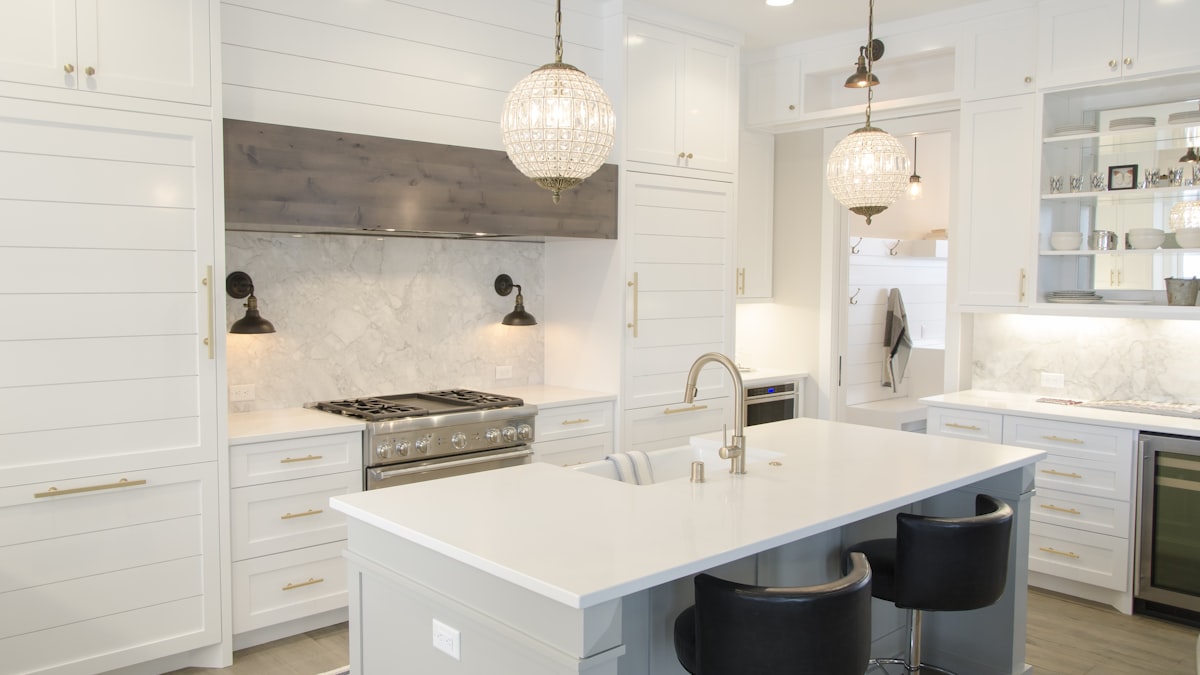
A room lit by a single overhead fixture is a room that has not been thought about. This is not an aesthetic judgment. It is a practical observation. Single-source overhead lighting creates flat, uniform illumination that flattens faces, eliminates shadow, and makes spaces feel like waiting rooms. Most homes are lit this way.
Layered lighting is not complicated. It follows a straightforward logic that, once understood, makes every space you inhabit better. Three layers. Multiple sources. Dimmers on everything. That is the entire principle.
The Three Layers
The language of lighting design distinguishes three functional layers. Each one does something specific. Together, they create a room that works across times of day and different uses.
Ambient lighting is the general illumination layer. It fills the room with enough light to move around, see clearly, and function. This is typically delivered by ceiling-mounted fixtures: recessed downlights, surface-mounted ceiling fixtures, or pendant lights positioned centrally. It is the baseline.
Task lighting is directed, functional light for specific activities. Reading, cooking, applying makeup, working at a desk. Task lighting is positioned close to the surface where work happens and is bright enough to do that work without eye strain. It does not try to light the whole room.
Accent lighting is the layer that adds depth, drama, and visual interest. It directs light at specific objects or surfaces: artwork, a textured wall, a bookcase, a plant. Accent lighting creates the pools and shadows that give a room visual life. Without it, a room reads as flat, regardless of how pleasant the ambient light is.
The error most rooms make is treating lighting as a single-layer problem. If you find yourself searching for “the best ceiling light” for a living room, you are already approaching this incorrectly.
Why Shadows Matter
Counterintuitive as it may seem, shadows are what make a room feel warm. A space with uniform, high-intensity lighting has no shadows. Without shadows, surfaces look flat, materials lose their texture, and faces lose their dimension.
The reason candlelit restaurants feel intimate is not merely low light. It is the extreme variation between light and shadow that creates depth. Layered lighting does the same thing at functional light levels.
Aim for variation, not uniformity. A room where some areas are brighter (task zones, focal points) and others are darker (corners, transitions) feels more alive and more human than a room where every surface is evenly illuminated.
Dimmers: Non-Negotiable
Every layer of light should be on a dimmer. This is the single most impactful change most homes can make to their lighting.
Here is why. The same room needs to function at 2pm on a bright Saturday and at 9pm on a Tuesday evening. These are different lighting conditions. A fixed-output ceiling fixture cannot serve both moments well. At full output, it creates evening glare. Dimmed, the overhead light alone is insufficient.
With dimmers on every circuit, you control the balance of layers. In the evening, dim the ambient source significantly, raise the accent sources, and use task lighting where needed. The room feels warmer, calmer, and more intentional.
Modern dimmers are LED-compatible and relatively inexpensive. The rewiring cost is real but modest. This is worth doing before you spend money on new fixtures.
Smart bulbs and systems (Philips Hue and similar) allow dimming and color temperature control without rewiring, which is a reasonable compromise in rental situations or where rewiring is impractical.
Color Temperature: The Invisible Layer
Color temperature, measured in Kelvin, affects how light makes a room feel more than almost any other factor. A full treatment of Kelvin values is in our color temperature guide, but the essential principles for layering:
Warm light (2700K to 3000K) is appropriate for living rooms, bedrooms, and dining rooms. It flatters skin tones, creates a sense of ease, and reads as evening-appropriate.
Neutral light (3500K to 4000K) is appropriate for kitchens, bathrooms, and workspaces where clarity and accuracy matter more than atmosphere.
Do not mix warm and cool sources in the same visible field. A 2700K pendant above the dining table paired with 4000K recessed lights in the adjacent living room looks discordant and amateurish. Keep color temperatures consistent within a space. Where you move from one zone to another (kitchen to living room), a transition in color temperature is acceptable, but the shift should be intentional, not accidental.
Room-by-Room Lighting Plans
Living Room
The living room needs to do the most work of any space in the home. It is used for conversation, reading, watching television, hosting, and quiet evenings alone. No single lighting configuration serves all of these.
Ambient layer: A central pendant or recessed downlights, on dimmer. In rooms with lower ceilings, a flush-mount or semi-flush fixture avoids the psychological compression of a pendant. Avoid recessed lights that are too bright or too numerous. Four to six well-placed downlights are better than twelve.
Task layer: A floor lamp positioned beside the primary reading chair, and table lamps on either side of the sofa. These should be at eye level when seated, directing light downward onto reading surfaces. Avoid tall arc lamps positioned behind the sofa where they create backlight rather than reading light.
Accent layer: Picture lights over artwork. An uplight behind a large plant. LED tape or a directional spot inside a bookcase. At minimum, one accent source.
The configuration for a relaxed evening: Ambient at 20-30 percent, table lamps on (these often have their own switches and no dimmer), accent sources on. Total effect: warm, layered, alive.
Bedroom
The bedroom is the simplest room to light well because the ambient demands are lower.
Ambient layer: A central ceiling fixture on dimmer, or recessed lights. Keep this warm (2700K). Avoid cool or bright sources in the bedroom. The ceiling fixture is primarily for getting dressed and cleaning the room, not for the bedroom’s primary function.
Task layer: Bedside reading lights. This is more nuanced than it appears. The ideal bedside light is adjustable in height or angle, positioned so it lights the page without shining directly at a sleeping partner. A wall-mounted swing arm light is the classic solution. A table lamp works if tall enough. The shade should direct light downward.
Accent layer: Optional in the bedroom, but a directional light on a piece of artwork or a low lamp on a dresser adds visual warmth. Some prefer no accent layer in the bedroom, which is a reasonable choice.
What to avoid: Overhead lights that come on at full brightness the moment someone enters. Install a bedside switch or smart switch so the first light activated at night is a lamp, not the ceiling.
Kitchen
Kitchens require more light and are more task-focused than any other room. The temptation to install a single decorative pendant and call it done should be resisted.
Ambient layer: Recessed downlights positioned directly above countertops and the island. A pendant light over the kitchen island is primarily decorative and should supplement, not replace, functional downlighting.
Task layer: Under-cabinet LED strips are the most useful kitchen lighting addition available. They eliminate the shadow that overhead lighting casts on the countertop when you stand at it. This is the shadow that makes chopping vegetables at a poorly lit countertop unpleasant. Under-cabinet strips solve it directly.
Accent layer: The kitchen benefits less from accent lighting than other rooms, but lighting inside glass-fronted cabinetry is a worthwhile detail if your cabinets support it.
Color temperature in the kitchen: 3000K to 3500K is ideal. Warm enough to feel residential, cool enough to see food colors accurately.
Dining Room
The dining room is the room where a single pendant works best, but that pendant should rarely operate alone.
Ambient layer: The pendant or chandelier above the table is the ambient source, but treat it as a primary accent source in the evening and run it at 40-60 percent output. The scale should be proportional: a pendant’s diameter should be roughly half the table’s width, or multiple smaller pendants can span the length.
Task layer: In most dining rooms, the pendant provides adequate task light for the table. No additional task sources are needed.
Accent layer: Wall sconces flanking a sideboard, or a picture light above a key piece of art, provide the secondary layer that stops the room from feeling like a theater spotlight on a dark stage. When the pendant is dimmed, these sources maintain the room’s presence.
The dining room mistake: Installing a statement pendant at full brightness. This is only acceptable during parties. For regular meals, the pendant should be low enough that it feels like candlelight from above. Bright overhead dining lighting is one of the most reliable ways to make a meal feel rushed.
Bathroom
Bathrooms have specific functional requirements that conflict with each other. The mirror area needs flattering, accurate task light. The overall space benefits from warmer, lower-intensity ambient light.
Ambient layer: Recessed downlights or a ceiling fixture, neutral-warm (3000K). Avoid very warm bathroom lighting; it makes it difficult to see skin color accurately, which matters when applying makeup or checking health.
Task layer: Mirror lighting is the most important decision in bathroom lighting. Side-mounted sconces at face height are the professional recommendation. They provide even, shadow-free illumination across the face. A single fixture above the mirror creates downward shadows that age everyone. If ceiling constraints prevent sconces, a well-diffused horizontal bar fixture above the mirror is the next best option.
Accent layer: A small directional light on a plant, a low lamp on a countertop, or LED tape below a floating vanity all add dimension. In bathrooms, the accent layer is more about mood than visual complexity.
Workspace
The workspace requires accurate, stable light that reduces eye strain. This is the most function-forward room to light.
Ambient layer: Even, neutral (3500K to 4000K) ceiling light that eliminates shadows and provides consistent illumination.
Task layer: A quality desk lamp positioned to the left (for right-handed users) or right (for left-handed users), aimed at the work surface. Monitor-adjacent lighting reduces eye strain in the evening by reducing the contrast between the bright screen and the dark room.
Accent layer: Optional. Some workspaces benefit from a desk or shelf light that provides visual interest. Avoid anything that creates glare on a computer screen.
Common Mistakes
Too many recessed downlights. This is the lighting contractor’s default because it is easy to install and charge for. Twelve recessed lights in a living room create a grid of bright spots on the ceiling that cannot be made to feel warm regardless of color temperature. Eight or fewer, with other sources supplementing, is almost always better.
No dimmers. Addressed above, but worth repeating. Fixed-output lighting cannot flex to serve different times of day.
Table lamps at the wrong height. A table lamp’s shade should sit at roughly shoulder height when you are seated, directing light downward. Lamps that are too short sit below eye level and do not illuminate reading surfaces effectively.
Ignoring the floor. Uplights and low floor lamps create light from below, which is unusual and visually interesting. A floor-level uplight behind a plant or in a corner adds a layer of light that no ceiling fixture can replicate.
Buying fixtures for how they look off. A pendant looks different illuminated. A bulb that is too bright, too cool, or positioned incorrectly will undermine an excellent fixture. Choose bulbs as carefully as you choose fixtures.
The Bulb Question
LED has won. Incandescent is largely unavailable in most markets. Halogen is being phased out. The meaningful LED variables are color temperature (as discussed), CRI (Color Rendering Index), and output.
CRI above 90 is the threshold for good color rendering. Standard LEDs often measure 80-85, which is acceptable but not excellent. For task areas (kitchen, bathrooms, workspaces), CRI 90 or above makes a visible difference. For living spaces and bedrooms, it matters less.
Dimmability. Not all LED bulbs dim smoothly. Cheap bulbs flicker or cannot dim below 30 percent. For any dimmed circuit, check that the bulb is rated for dimming and compatible with your specific dimmer switch. This detail prevents significant frustration.
The Bottom Line
Layer your lighting rather than relying on a single source. Install dimmers on every circuit you can access. Use warm temperatures (2700K to 3000K) in living and sleeping spaces, neutral-warm (3000K to 3500K) in kitchens and bathrooms. Place task light close to where work happens. Add at least one accent source per room.
The investment in getting this right is mostly planning and, in some cases, hiring an electrician for a dimmer installation. The result is a home that works as well at 10pm as it does at noon, and that looks considerably more considered than the single-pendant alternative.


