Clear the Counters First
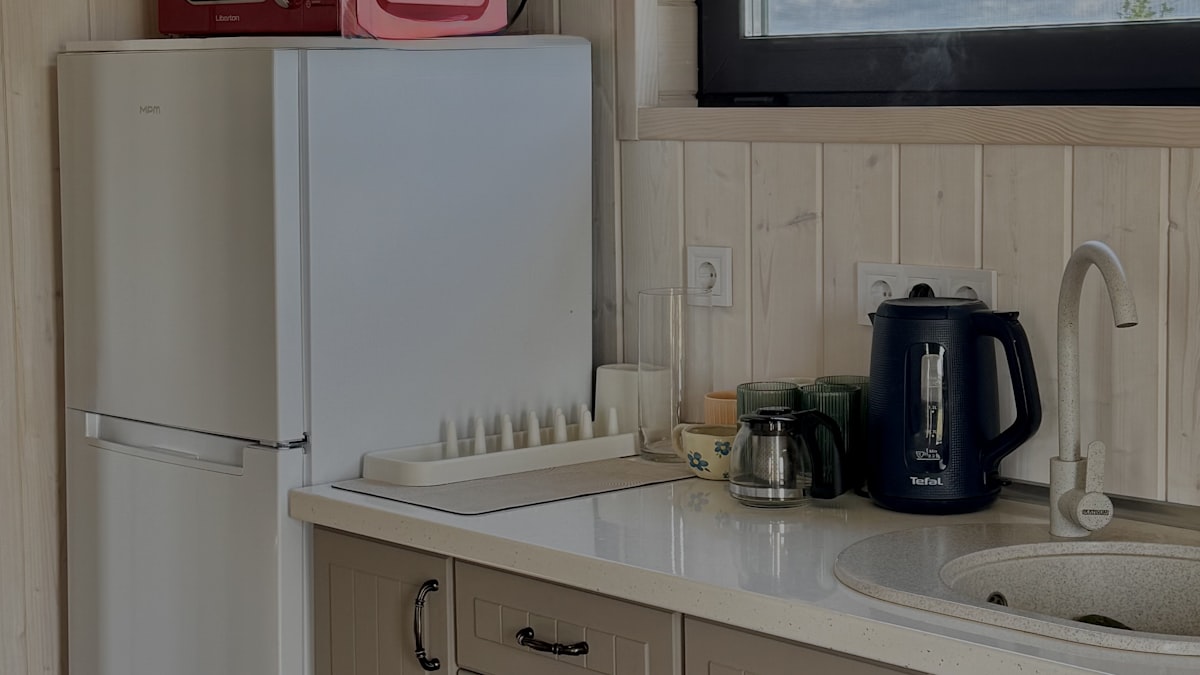
Counter space is the most valuable surface in a small kitchen. If the counters are buried under appliances, knife blocks, fruit bowls, and paper towel holders, the kitchen feels smaller than it is and functions worse than it could. The single most impactful organizing move is to get everything off the counter that is not used daily.
A small kitchen with clear counters feels twice as spacious as the same kitchen with cluttered ones. This is not an exaggeration. The visual weight of objects on a horizontal surface dominates how the brain perceives available space. Empty counter reads as room to work. Full counter reads as no room at all.
This guide covers the full organizing process: how to audit what stays, what vertical storage systems actually work, how to reorganize cabinets and drawers, and what products are worth buying at specific price points.
Step 1: The Full Empty
Organization cannot happen on top of clutter. Empty every drawer, every cabinet, every shelf. Pile everything on the dining table or living room floor. Yes, all of it.
This is uncomfortable. That is the point. Seeing every kitchen item gathered in one place reveals the scope of what has accumulated. Three can openers. Seven mismatched food storage lids. A waffle maker used once in 2023.
The Sort
Group items by category, not by where they were stored:
- Cooking utensils: Spatulas, spoons, whisks, tongs, ladles
- Knives: Chef’s knife, paring knife, bread knife, the knife that came free with something
- Pots and pans: Everything that goes on or in the stove
- Bakeware: Sheet pans, muffin tins, cooling racks, mixing bowls
- Small appliances: Toaster, blender, mixer, coffee maker, rice cooker
- Food storage: Containers, lids, bags, wraps
- Dishes and glasses: Plates, bowls, mugs, cups
- Specialty tools: Garlic press, avocado tool, egg separator, mandoline
The Audit
For each item, ask one question: “Have we used this in the last six months?”
If the answer is no and the item is not seasonal (like a turkey roasting pan), it leaves. Donate it, give it away, or recycle it. The goal is to return only items that earn their space back to the kitchen.
The biggest wins come from these categories:
- Duplicate utensils. One good spatula replaces three mediocre ones.
- Unitaskers. A garlic press, an avocado slicer, a strawberry huller. A sharp chef’s knife does all of these jobs. The drawer space these gadgets occupy is worth more than the 30 seconds they save.
- Food storage containers without matching lids. If the lid is missing, the container is useless. Consolidate down to one uniform set.
Step 2: Vertical Storage (Use the Walls)
When cabinet space is limited, wall space is the expansion zone. Every square foot of wall between the counter and the upper cabinets is available storage.
Magnetic Knife Strip
A wall-mounted magnetic knife strip replaces a countertop knife block. A 16-inch (40 cm) strip holds 6 to 8 knives and frees up roughly 6 x 4 inches (15 x 10 cm) of counter space.
The Woodsom Walnut Magnetic Knife Strip ($40, 16 inches) looks clean and holds knives securely. The budget alternative is the IKEA Kungsfors magnetic knife rack ($10, 22 inches / 56 cm), which is plain stainless steel but functional.
Pegboard
A 24 x 32-inch (60 x 80 cm) pegboard mounted on the wall near the stove holds pots, pans, cooking utensils, measuring cups, and oven mitts. Everything is visible, accessible, and off the counter and out of the drawers.
The IKEA Skadis pegboard ($20 for the board, hooks and accessories sold separately at $3 to $10 each) is the most popular option. A full setup with 10 hooks, 2 shelves, and 2 containers runs roughly $50 to $60 total.
Wall-Mounted Shelving
Open shelves above the counter hold items used daily: cooking oils, salt and pepper, spice jars, coffee mugs. They add storage without the visual weight of closed upper cabinets.
The IKEA Kungsfors wall shelf ($15, 24 inches / 60 cm) and the West Elm Floating Wood Shelf ($49, 36 inches / 91 cm) are two solid options at different price points.
Rail Systems
A wall-mounted rail with S-hooks creates hanging storage for anything with a handle or a loop. Mugs, colanders, pans, towels, utensils. The IKEA Kungsfors rail system ($8 for a 22-inch / 56 cm rail, S-hooks $4 for a pack of 5) is the industry standard for small kitchen wall storage.
| Wall Storage Solution | Cost | What It Holds | Counter Space Recovered |
|---|---|---|---|
| Magnetic knife strip | $10 to $40 | 6 to 8 knives | 24 sq inches (155 sq cm) |
| Pegboard (24 x 32 in) | $50 to $60 (with accessories) | Pots, pans, utensils | Entire drawer equivalent |
| Wall-mounted shelf | $15 to $50 | Spices, oils, mugs | 12 to 24 sq inches |
| Rail system with S-hooks | $12 to $20 | Mugs, pans, towels | Drawer or cabinet equivalent |
Step 3: Cabinet Optimization
Shelf Risers
Most kitchen shelves have 12 to 14 inches (30 to 35 cm) of vertical space between them. A stack of dinner plates uses 4 to 5 inches. That leaves 7 to 9 inches of empty air above the plates.
A wire shelf riser creates a second level within the same shelf. Place plates on the bottom and bowls or saucers on the riser. This immediately doubles the usable area of a single shelf.
The SimpleHouseware Stackable Shelf Organizer ($15 for a set of 2) fits standard kitchen cabinets and supports up to 20 pounds per tier.
Tension Rods for Vertical Dividers
Cutting boards, baking sheets, cooling racks, and muffin tins stored flat in a stack are a nightmare to retrieve. The bottom item requires removing everything above it.
Install a tension rod vertically inside a lower cabinet to create upright dividers. The items stand like books on a shelf, and pulling out a single baking sheet takes one hand and one second.
The iDesign Classico tension rod ($8 each, adjustable 9 to 16 inches / 23 to 40 cm) fits most standard lower cabinets. Two rods create three slots, enough for 8 to 10 flat items stored upright.
Over-the-Door Organizers
The inside of cabinet doors is unused real estate. A slim organizer mounted to the inside of a door holds spices, measuring cups, cleaning supplies, or plastic wrap and aluminum foil.
The SimpleHouseware Over Cabinet Door Organizer ($15) mounts with screws or adhesive and adds 3 to 4 small shelves inside any standard cabinet door.
Drawer Dividers
An undivided kitchen drawer becomes a tangle of utensils, twist ties, rubber bands, and mystery objects within weeks.
Adjustable bamboo drawer dividers ($20 to $35 for a set of 4 to 6) create specific zones within any drawer. Assign zones: flatware, cooking utensils, baking tools, miscellaneous. Everything has a home. Everything returns to that home.
The Bambusi Bamboo Drawer Organizer ($30 for an expandable set) fits drawers 13 to 19 inches (33 to 48 cm) wide and has 6 adjustable compartments.
Step 4: The Appliance Audit
Small appliances are the largest single consumer of counter and cabinet space. Most kitchens have too many.
The Daily-Use Rule
Only appliances used every day live on the counter. For most households, that means the coffee maker. Maybe the toaster. Everything else goes in a cabinet or on a shelf.
| Appliance | Daily use? | Counter-worthy? |
|---|---|---|
| Coffee maker | Yes | Yes |
| Toaster | Usually | Yes, if used 5+ times per week |
| Stand mixer | Rarely | No. Store in a lower cabinet |
| Blender | Varies | Only if used daily. Otherwise, cabinet |
| Instant Pot | 2 to 3 times/week | No. Too large for counter. Store in lower cabinet |
| Air fryer | Varies | Only if used 4+ times per week |
| Rice cooker | Varies | Only in households that eat rice daily |
A KitchenAid stand mixer occupies roughly 14 x 9 inches (36 x 23 cm) of counter space. That is 126 square inches. In a small kitchen where total counter space might be 8 to 10 square feet, the mixer alone consumes roughly 10% of the available work surface. If it gets used three times a month, that trade-off is not worth it.
Step 5: Food Storage Consolidation
Mismatched food storage containers are the silent space killer. Switch to one uniform container system with interchangeable lids. The containers stack neatly, the lids store together, and the mismatched chaos disappears.
The Rubbermaid Brilliance 10-piece set ($25) is the best value option. Clear bodies show contents at a glance. Lids snap securely and are microwave-safe. The containers nest when empty, consuming minimal cabinet space.
For dry goods (flour, sugar, rice, pasta), square or rectangular containers maximize shelf space. Round containers waste the corners. The OXO Good Grips POP containers ($8 to $20 each depending on size) have airtight seals, stack securely, and fit together in a grid pattern that wastes almost no shelf space.
The Counter-Free Challenge
Try it for one week. Remove everything from the kitchen counters except the coffee maker. Cooking utensils go in a drawer. The toaster goes in a cabinet. The fruit bowl goes on a shelf inside the pantry.
Cook normally for seven days. Notice how much easier it is to prep food with an empty work surface. Notice how much faster cleanup goes when there is nothing to move out of the way.
Most people who try this experiment do not go back. The convenience of a clear counter outweighs the inconvenience of opening a cabinet to retrieve the toaster. And the kitchen, even a small one, suddenly feels like a space designed for cooking rather than a space designed for storing things.
Budget Summary
| Investment Level | Cost | What It Covers |
|---|---|---|
| Starter | $50 to $100 | Magnetic knife strip, shelf risers (2), drawer dividers, tension rods (2) |
| Complete organization | $100 to $200 | Everything above plus pegboard with accessories, over-door organizers, one uniform food storage set |
| Full overhaul | $200 to $400 | Everything above plus wall-mounted rail system, open shelving, OXO POP containers for pantry staples |
The return on investment here is not measured in dollars. It is measured in the daily experience of cooking in a small kitchen that works instead of fighting one that does not.