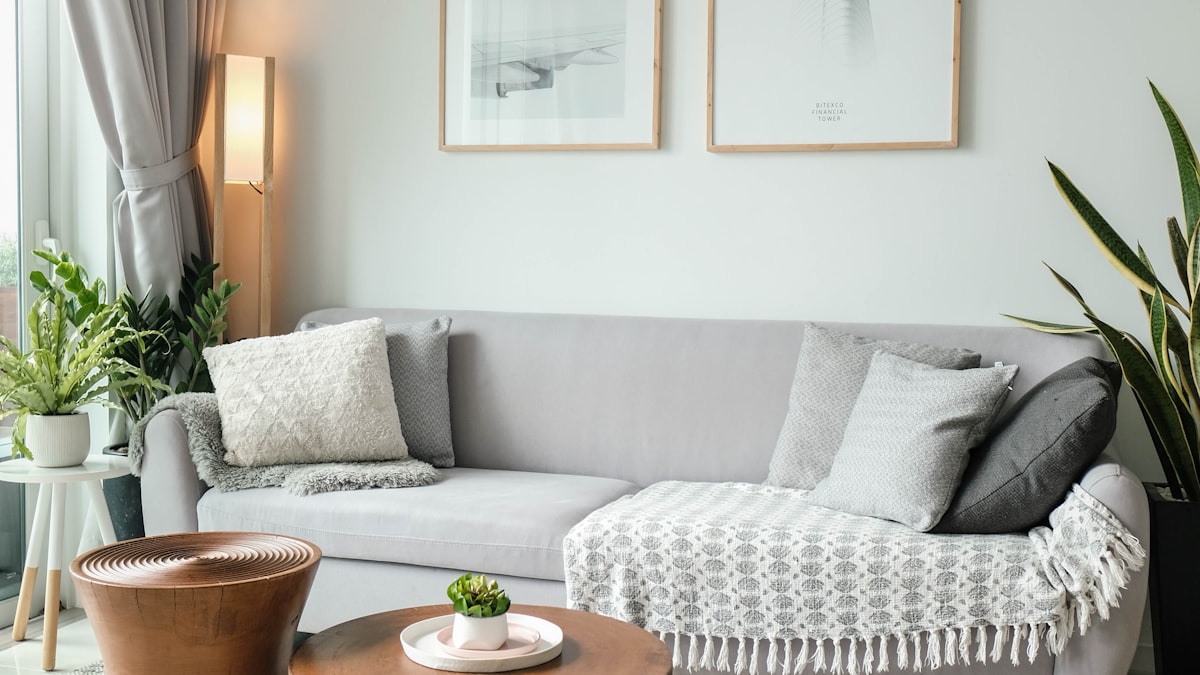
Set the thermostat to 65°F, hang blackout curtains, and remove the TV. Those three changes alone will improve sleep quality more than any mattress upgrade, supplement, or sleep app. The rest of this guide covers every variable worth controlling, from bulb color temperature to rug placement, with specific product recommendations and measurable targets.
A bedroom optimized for sleep is not a luxury. It is the highest-return investment in daily performance. Poor sleep compounds. One bad night reduces cognitive function by roughly 30%. A week of 6-hour nights mimics the impairment of legal intoxication. The fix is not more sleep aids. It is a better room.
The Sleep Environment Variables
| Variable | Optimal Range | Why It Matters |
|---|---|---|
| Room Temperature | 60°F to 67°F (15.5°C to 19.4°C) | Core body temp must drop 2-3°F to trigger sleep onset |
| Light Level | Below 1 lux (pitch black) | Any ambient light suppresses melatonin production |
| Humidity | 30% to 50% | Below 30% dries the throat. Above 50% promotes mold and dust mites |
| Noise Floor | 30 to 40 decibels (constant) | Masks abrupt sounds that trigger micro-awakenings |
| Air Quality | Below 1000 ppm CO2 | Elevated CO2 causes morning grogginess and headaches |
These are not suggestions. They are measurable targets. A $15 hygrometer and a $30 CO2 monitor provide the data needed to dial in every variable.
Temperature: The Most Underrated Sleep Factor
The human body initiates sleep by dropping its core temperature 2 to 3 degrees Fahrenheit. A room set at 72°F (22°C) fights this process. The body has to work harder to shed heat, which delays sleep onset and reduces time spent in deep, restorative stages.
The target is 65°F (18.3°C) for most people. Some sleep better at 60°F. Few sleep well above 68°F. A programmable thermostat that drops the temperature 30 minutes before bedtime automates this entirely.
Bedding That Breathes
The mattress and sheets trap or release body heat. Synthetic microfiber sheets are the worst offenders. They create a moisture barrier against the skin that raises surface temperature and triggers night sweats.
| Fabric | Breathability | Best Season | Feel | Price Range (Queen Set) |
|---|---|---|---|---|
| Percale Cotton | Excellent | Summer and year-round | Crisp, cool | $80 to $250 |
| Linen | Excellent | Summer, humid climates | Textured, relaxed | $120 to $350 |
| Bamboo Viscose | Very Good | Year-round | Silky, smooth | $60 to $200 |
| Sateen Cotton | Good | Winter | Buttery, warm | $90 to $280 |
| Microfiber Polyester | Poor | Avoid | Slippery, hot | $20 to $50 |
Percale cotton in a 200 to 400 thread count, single-ply weave is the best all-around choice. It sleeps cool, gets softer with every wash, and lasts years. Avoid anything marketed as “1000 thread count” because those sheets use multi-ply yarn tricks that make them heavier and hotter.
For pillows, look for shredded latex or buckwheat hull fills. Both allow airflow through the pillow rather than trapping heat against the head. Memory foam pillows run warm unless specifically designed with gel-infused cooling layers.
Cooling Technology
For hot sleepers who still struggle after optimizing sheets and thermostat settings, active cooling systems exist.
- ChiliSleep Dock Pro ($499): Circulates water through a mattress pad at a user-set temperature between 55°F and 115°F. Controlled via app. Runs quietly at about 28 decibels.
- BedJet 3 ($449): Blows temperature-controlled air directly into the sheets through a hose and sheet attachment. Works for both cooling and warming.
- Eight Sleep Pod 3 ($2,049 to $2,449): Full mattress with integrated water-based temperature control on each side. Tracks sleep stages and adjusts temperature automatically.
These are expensive. They are also effective for people who cannot achieve comfortable sleep temperature through passive means alone.
Light Control: The Blackout Strategy
Any light above 1 lux suppresses melatonin production. For reference, a nightlight produces about 5 to 10 lux. A phone screen at minimum brightness produces 5 to 40 lux. Streetlight filtering through standard curtains produces 2 to 10 lux. All of these are enough to disrupt the hormonal cascade that initiates deep sleep.
The Curtain Setup
Standard curtains are insufficient. True blackout requires both the right fabric and the right installation.
- Fabric: Look for curtains with a foam-backed or triple-weave blackout lining. Pottery Barn Emery Linen Blackout Curtains ($109 to $149 per panel) and West Elm Cotton Canvas Blackout Curtains ($89 to $119 per panel) both block 99% of incoming light.
- Rod placement: Mount the curtain rod flush against the ceiling, not at the standard 4-inch drop above the window frame. This eliminates the light gap at the top.
- Width overhang: The rod must extend at least 6 inches (15 cm) past the window frame on each side. This prevents light leaking around the edges.
- Return brackets: Wraparound return brackets curve the curtain panels back toward the wall at each end, blocking side light completely.
For renters who cannot drill into walls, Redi Shade temporary blackout shades ($8 to $15 per window) attach with adhesive clips and block light effectively as a stopgap.
Evening Lighting Protocol
Stop using the overhead light after 8:00 PM. Ceiling-mounted fixtures mimic the midday sun. They blast the retinas with enough lux to shift the circadian clock by hours.
Switch to table lamps, floor lamps, or wall sconces positioned at eye level or lower. The lower the light source, the less it interferes with melatonin production.
- Bulb color temperature: 2000K to 2700K. This range produces a warm amber glow. Anything above 3000K has too much blue spectrum light.
- Smart bulbs: Philips Hue White Ambiance ($15 per bulb, bridge required) allows scheduling that automatically shifts color temperature from 4000K during the day to 2200K at night.
- Red light option: True red-spectrum bulbs (620nm to 700nm wavelength) have the least impact on melatonin. A red night light in the bathroom eliminates the need to flip on a bright overhead during middle-of-the-night trips.
Sound Management
Complete silence is counterproductive. The human auditory system remains active during sleep, monitoring for threats. In a perfectly silent room, a single creak, car horn, or neighbor’s door becomes amplified. The brain registers it as a potential danger and triggers a micro-awakening.
A consistent, low-frequency sound floor between 30 and 40 decibels masks these disruptions without becoming a distraction itself.
White Noise vs. Brown Noise vs. Pink Noise
| Type | Frequency Profile | Sound Comparison | Best For |
|---|---|---|---|
| White Noise | Equal energy across all frequencies | TV static, hissing fan | Masking high-pitched sounds (voices, alarms) |
| Pink Noise | Lower frequencies emphasized | Steady rain, wind through trees | General sleep, gentle masking |
| Brown Noise | Heavily bass-weighted | Rumbling waterfall, distant thunder | Deep masking, soothing for anxious minds |
Brown noise is the most popular for sleep. Its deep, rumbling profile feels more natural and less grating than white noise over 8 hours.
Hardware Recommendations
- Marpac Dohm Classic ($45): Mechanical fan-based sound machine. Produces genuine analog white/pink noise. No digital loops. The internal fan creates organic, non-repeating sound. Volume and tone adjustable via two rotating caps.
- LectroFan EVO ($55): Digital sound machine with 22 unique sounds including fan variations and brown noise. Smaller footprint than the Dohm. Better for travel.
- A basic box fan ($20): Cheaper than both. Produces genuine air movement and consistent noise. Less refined, but effective.
Avoid phone apps for long-term use. Most loop short audio clips (2 to 10 seconds). The brain eventually detects the loop point, which becomes a source of irritation rather than relaxation.
Soft Surfaces Absorb Sound
Hardwood and tile floors reflect sound waves, creating echoes that make a room feel acoustically harsh. A large, dense area rug under the bed absorbs these reflections and softens the room’s acoustic profile.
Place the rug so it extends at least 24 inches (61 cm) beyond the sides and foot of the bed. This ensures bare feet land on a soft surface when getting up, which also reduces the jarring transition from sleep to standing.
The Technology Purge
The phone is the single biggest threat to sleep quality. It is engineered to capture attention. The bedroom is the worst place for that dynamic.
Remove These From the Bedroom
- The TV. It emits blue light, encourages late-night viewing, and introduces stimulating content directly before sleep.
- The laptop or tablet. Same problems as the TV, plus the temptation to check email or work.
- The phone (ideally). Charge it in the kitchen or hallway. If it must stay in the room, place it face-down on the far side of the room with Do Not Disturb enabled.
Replace the Phone Alarm
Buy a dedicated alarm clock. The Braun BC12 Classic Analog Alarm ($35) is compact, reliable, and backlit only on demand. The Hatch Restore 2 ($200) doubles as a sunrise simulator, gradually increasing warm light over 30 minutes before the alarm sounds. This simulates a natural dawn and reduces the cortisol spike of a sudden alarm.
Cord Management
Visible cable clutter creates subconscious visual stress. Route charging cables behind furniture using adhesive cable clips. A Bluelounge CableBox ($30) hides power strips and tangled cords inside a ventilated enclosure that sits on or under the nightstand.
Layout and Furniture Placement
The physical arrangement of the bedroom affects how safe and calm the brain feels in the space.
The Command Position
Place the bed so the sleeper has a clear sightline to the door without being directly in line with the doorway. This positioning satisfies an ancient security instinct. The brain registers that the room’s entry point is visible but not threatening, which reduces background anxiety.
Symmetry Reduces Visual Stress
Matching nightstands and matching lamps on either side of the bed create a balanced visual field. The brain processes symmetry as orderly and calm. Mismatched furniture on opposite sides introduces a subtle visual tension that, while minor, adds to the cumulative sensory load.
Minimalism Is Functional
The bedroom is not a storage room. Remove anything unrelated to sleep or intimacy.
- Gym equipment belongs in another room or the garage
- Laundry baskets belong in a closet or bathroom
- Work papers, laptops, and books about work belong in the office
- Stacks of unread books create a visual to-do list that the brain processes as unfinished obligations
A clear bedroom signals to the brain that this space has one purpose. Over time, the association between the room and sleep strengthens, making it easier to fall asleep simply by entering the space.
Air Quality
Bedroom air quality deteriorates overnight. Two adults in a closed room can push CO2 levels above 2000 ppm by morning. Elevated CO2 causes headaches, grogginess, and reduced sleep quality.
- Crack a window if outdoor noise and temperature permit. Even a 1-inch gap improves air exchange significantly.
- Run a HEPA air purifier on the lowest setting. The Levoit Core 300 ($100) filters dust, pollen, and pet dander while operating at 24 decibels on its lowest fan speed. Quiet enough to double as a white noise source.
- Add one or two plants if the space allows. Snake plants and pothos release oxygen at night through a process called crassulacean acid metabolism. The air quality impact is modest but positive.
The Implementation Order
For anyone starting from scratch, prioritize changes in this order based on impact per dollar spent.
- Set thermostat to 65°F (free)
- Remove TV and phone from the bedroom (free)
- Switch to warm bulbs, 2700K or below ($5 to $15 per bulb)
- Install blackout curtains ($80 to $300 total)
- Replace sheets with percale or linen ($80 to $250)
- Add a sound machine ($20 to $55)
- Add an air purifier ($100)
- Buy a dedicated alarm clock ($35 to $200)
- Upgrade to active cooling system ($449 to $2,449, only if still struggling)
The first three items are free or nearly free and deliver the largest improvement. Most people notice a difference within the first week. The remaining items compound the gains incrementally.
The Payoff
A properly optimized bedroom does not just improve sleep. It improves everything that depends on sleep. Focus. Mood. Recovery from exercise. Immune function. Decision-making. Appetite regulation.
The bedroom is not a room. It is infrastructure. Treat it with the same precision applied to a kitchen renovation or a home office setup. Measure the variables. Hit the targets. Sleep better tonight. If you’re still tossing and turning, a weighted blanket can provide the deep pressure stimulation that helps many restless sleepers settle.


